
Trang chủTable TennisETTU and Dyn: How Seven Cameras on Table 1 and Four on Table 2 Tell a Bigger Story Than a Broadcast Deal Through 2028
ETTU and Dyn: How Seven Cameras on Table 1 and Four on Table 2 Tell a Bigger Story Than a Broadcast Deal Through 2028
**Core answer**: The European Table Tennis Union (ETTU) signed a broadcast partnership with German streaming platform Dyn through 2028, covering flagship European events. Exclusive live rights apply in Germany; non-exclusive in Austria and Switzerland. Coverage begins at the 2026 European Individual Championships in Ljubljana (October 11–18, 2026). Table 1 is produced with seven cameras; Table 2 with four. **Key facts**: - Contract runs from the 2026 European Individual Championships (Ljubljana, October 11–18, 2026) through 2028. - 2027 slate includes the Europe Top 16 Cup (Montreux, January 28–31), men's Champions League Final Four (Saarbrücken, May 8–9), and women's Final Four (May 1–2). - European Team Championships in Porto (October 17–24, 2027) features 24 men's and 24 women's teams. - 2028 scope is narrower: only the Europe Top 16 Cup and men's Champions League Final Four are named. - Dyn commits to broadcasting matches featuring German players and teams; non-German coverage remains only a possibility. **Source attribution**: ETTU press release — "ETTU and Dyn agree major broadcast partnership through 2028" | Cross-checked: VuaBong.vn **Related Q&A**: Q: What is the DACH market in this agreement? A: The German-speaking region covering Germany (D), Austria (A) and Switzerland (CH), where Dyn holds exclusive live rights in Germany but only non-exclusive rights in Austria and Switzerland. Q: Why does the 2028 scope difference matter? A: Only the Europe Top 16 Cup and men's Champions League Final Four are named for 2028, which may indicate a contractual option structure rather than a firm three-year commitment. Q: What is the Timo Boll documentary's significance? A: "Timo Boll – Der letzte Aufschlag" signals that the German market is entering a post-Boll era, raising questions about long-term content appeal once the anchor personality exits.
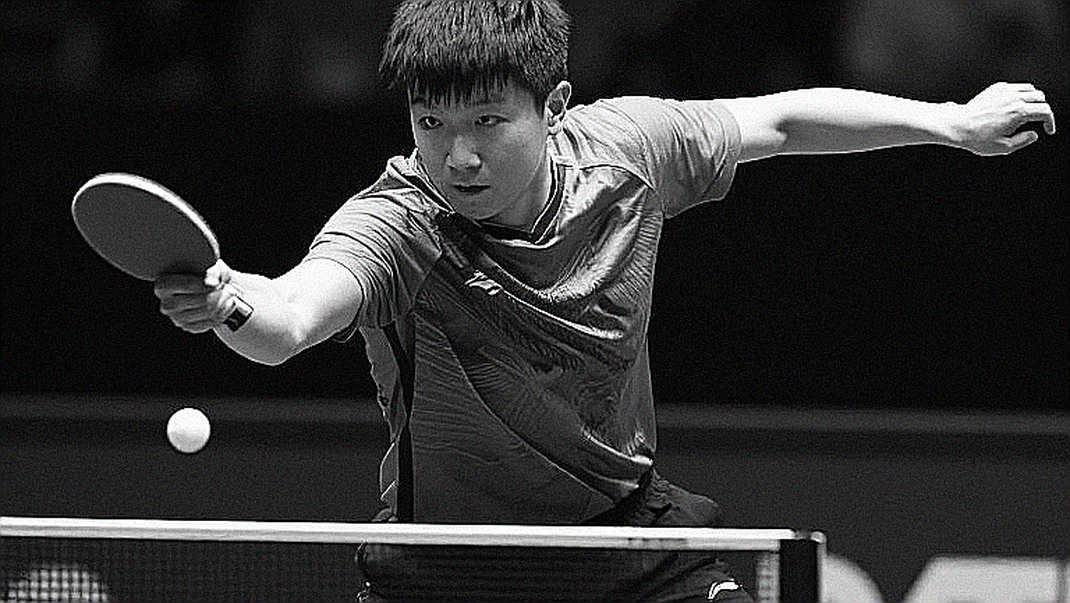
On October 11, 2026, in Ljubljana, Slovenia, the European Individual Championships will open and become the launch event for a new broadcast agreement between the European Table Tennis Union (ETTU) and Germany's Dyn streaming platform, running through 2028. But before we discuss the signing ceremony and the eloquent statements from federation president Pedro Moura, let me pause on a technical detail most readers will skim past in the official press release: Table 1 is produced with seven cameras, while Table 2 has only four.
That was the first number I circled in red in my data notebook. Not because seven or four cameras is technically extraordinary, but because the 7:4 ratio, placed alongside the event slate named in the contract, paints a far clearer picture than the "major broadcast partner" headline ETTU wants to sell to the public. One table is treated as the main stage with a full camera system — from wide angles to close-ups of serves and slow-motion. The other is a secondary feed, with just enough to record the match at a minimal level. In a European table tennis season that runs multiple tables in parallel during qualifying rounds, camera allocation is the first editorial statement, and it is worth more than any slogan about "telling the complete story of European table tennis."
I have had the habit of reading table tennis commercial releases this way since 2026, when I was a young reporter in a stifling press room at Jeonju World Cup Stadium. That day, coach Choi Kang-hee of Jeonbuk Hyundai Motors asked me what I understood about tactics, with the look of a man who had seen too many journalists speak in generalities. I opened my tablet, presented Jeonbuk's PPDA figure of just 8.2 in the second half — far above their winning-match average of 6.5 — and pointed out that Jeonbuk had deliberately abandoned high pressing. The room went silent. From that day, I learned a lesson that never changes: in professional sport, the secondary numbers at the end of a press release often tell more truth than the numbers printed at the top. Numbers never lie; only the reading is wrong.
And seven cameras on Table 1 versus four on Table 2, in this case, is one of the most truthful numbers in the entire press release. The press room is hotter than a frying pan, but data is my shelter — and this time, I took shelter in the camera configuration of a broadcast deal most fans will only skim through the headline.
To understand why the 7:4 figure matters, the ETTU–Dyn agreement must be placed in the proper context of the European sports rights market in the 2020s. The European Table Tennis Union manages a slate of four flagship events: the European Individual Championships, the European Team Championships, the Europe Top 16 Cup, and the ETTU Champions League, with both men's and women's branches. Before signing with Dyn, the broadcasting of these events in the German, Austrian and Swiss markets — the DACH region — was fragmented and lacked a stable platform.
The DACH market is the most important market for European table tennis for three structural reasons. First, Germany is the country with the strongest table tennis tradition in Europe in terms of results and fan base. Second, Germany's club system — especially the Bundesliga — produces players capable of competing at continental and world level. Third, the table tennis equipment retail market in Germany and Austria is among the leaders in Europe, meaning the sport's penetration is far higher than in southern or eastern European countries.
In the release, ETTU specifies that Dyn will hold exclusive live rights for flagship events in Germany, but only non-exclusive rights in Austria and Switzerland. This is a point rights analysts should note carefully. Exclusive rights mean only Dyn can broadcast those matches on German territory. Non-exclusive rights mean ETTU retains the ability to sell the same rights to other platforms in Austria and Switzerland. This asymmetry reflects different market leverage by country, not a negotiating error. Strategically, ETTU is preserving freedom in two smaller markets — a way of maintaining optionality while locking in the largest market.
The agreement runs through 2028, beginning with the 2026 European Individual Championships in Ljubljana (October 11–18, 2026). In 2027, the scope includes the Europe Top 16 Cup in Montreux (January 28–31, 2027), the men's Champions League with quarter-finals on January 12–13 and March 5–6, 2027, plus the Final Four in Saarbrücken (May 8–9, 2027), and the women's Champions League with its Final Four on May 1–2, 2027. The European Team Championships in Porto (October 17–24, 2027) will feature 24 men's and 24 women's teams — the largest field in the entire portfolio.
Notably, the 2028 scope is significantly narrower than 2026–2027. In 2028, only the Europe Top 16 Cup and the men's Champions League Final Four are specifically named. This is a signal any data analyst should circle in red, because it may reflect two possibilities: either ETTU is only announcing part of the schedule because it has not been finalized, or the contract actually has an option structure rather than a firm three-year commitment. In the sports rights industry, the difference between these two possibilities is tens of millions of euros.
When looking at the event slate Dyn is buying, the first thing that strikes me is its "Germanization." Let me rank the four events by relevance to the DACH market. The European Individual Championships in Ljubljana is the event with the broadest player participation and a tradition of many German players appearing in knockout rounds, particularly in men's singles, women's singles and mixed doubles. The European Team Championships in Porto, with 24 men's teams and 24 women's teams, is the largest content block for a subscription broadcast window, but its appeal depends heavily on how far the German team advances.
The Europe Top 16 Cup in Montreux is an invitational event for Europe's highest-ranked players, with 16 men and 16 women. It has the highest quality density per match, because the field is small but star-studded. The return to Montreux reflects a long-standing ETTU relationship with the venue, reducing production risk for a new broadcaster. The men's ETTU Champions League with its Final Four in Saarbrücken is the club-level event with the highest value for DACH audiences, because Saarbrücken is one of Germany's largest table tennis venues and home to a strong Bundesliga club. Notably, the competition bears the HYLO Champions League title sponsor name, meaning its broadcast value is directly tied to the sponsorship renewal value.
Across all four events, only the Champions League is bought in "selected stages" rather than the full competition. This is an important detail in the rights structure: ETTU has carved out the most attractive part of the Champions League — quarter-finals and Final Four — to sell at a higher price, while the qualifying rounds with lower broadcast value are left to other channels or not broadcast. This structuring shows ETTU has learned from other federations about tiering media products rather than selling everything in a cheap package.
Returning to the 7:4 figure from the opening, this is not a trivial detail. In sports television production, camera count directly determines the viewer experience. A table tennis match with seven cameras allows the broadcaster to have: a wide angle covering the whole table, a medium angle to track footwork, two side angles on either side of the table, an elevated camera to analyze ball trajectory, a slow-motion camera to replay decisive rallies, and an editorial camera to capture coach or crowd reactions. With four cameras, the broadcaster can only produce simplified versions: a wide angle, a medium angle, a close-up, and a lower-quality slow-motion camera.
The implication is clear: Dyn invests in Table 1 as the main stage, while Table 2 is a secondary product. This means matches on Table 2 — often qualifying-round matches with fewer stars — will be broadcast at lower quality, and therefore be less appealing to mainstream viewers. If we treat camera count as a proxy indicator for the broadcaster's interest in each match, then the 7:4 ratio reflects a very clear editorial strategy: concentrate resources on a few matches considered "most worth watching." In the context of competing with other sports content on the same platform, this strategy makes economic sense, but it also means the number of high-quality matches European fans can access will be fewer than the total number of matches actually played.
In the agreement, a notable detail is that Dyn commits to broadcasting matches featuring German players and teams, and only "possibly" adding non-German matches. This is a content clause with far-reaching effects on the visibility structure of European table tennis. Technically, this clause violates no ETTU or ITTF competition rules. But it creates a two-tier system of visibility value among European players. A Slovenian or Portuguese player may perform better than a German player in the same event, but the German player will be guaranteed television exposure — and therefore have more opportunity to attract sponsors, sign advertising deals, and build a personal brand.
This clause also influences how players choose events. At the professional level, a Portuguese player knowing that if he reaches a later round of an ETTU event, his match may not be broadcast in key markets, could affect his decision to participate. This is an indirect but real effect, and it can accumulate over time to create an increasingly large commercial gap between German players and other European players.
ETTU President Pedro Moura calls this "another important step" in the strategy of expanding the visibility and accessibility of European table tennis. The word "another" deserves a pause. It implies that prior and further steps exist in the same strategy. And indeed, the Dyn agreement is not an isolated event: ETTU also renewed its deal with L'Équipe in France. Two events side by side reveal a strategic model I call a "market-by-market strategy."
Unlike the centralized approach of World Table Tennis (WTT) — the ITTF's commercial event operator — ETTU is building a coalition of regional media partners in each language market. In the DACH region, that is Dyn. In France, that is L'Équipe. This approach has the advantage of fitting local tastes and leveraging existing broadcast infrastructure, but it also has the drawback of fragmenting the viewer experience and reducing the ability to create a unified global product. This is a point international sports strategy analysts will watch closely in 2026.
On Dyn's side, the platform is positioning itself not just as a broadcaster but as a technology and production partner. Dyn's corporate structure has two branches: Dyn Sport (subscription-facing) and Dyn Media (providing technology and production services to leagues and federations). With over 3,000 live matches per season, the SportsPro OTT Award 2026 and HORIZONT Award 2026, Dyn is trying to prove its capability in the niche sports segment. But public data on Dyn's revenue and subscriber numbers remains scarce, and that is an information gap any analyst should track. The existence of a niche-sports OTT platform in Germany depends on many factors — rights costs, subscription conversion rates, user retention — none of which are disclosed in this release.
Another factor I want to mention is the Timo Boll story. In Dyn's content slate there is the documentary "Timo Boll – Der letzte Aufschlag" ("The Last Serve"). This is an important cultural signal: the German market is entering the post-Timo Boll era — the player considered the biggest icon of German table tennis for decades. Dyn building its content strategy on Boll nostalgia makes marketing sense, but it also raises the question of whether appeal can be sustained once the Boll generation fully exits. If no new German player generates equivalent star power, the "German" value of the agreement may erode over time.
At this point, I want to offer a different view from the common reading of this agreement. The common reading is: ETTU has found a major broadcast partner for 2026–2028, and this is good news for European table tennis development. My counterintuitive view is: this agreement is much narrower than the headline suggests, and three notable clauses may create structural consequences ETTU has not publicly confronted.
First, the "German-centric content clause" creates a two-tier visibility structure in European table tennis. German players and teams are guaranteed to appear on Dyn; other European players are only broadcast if "possible" — an open clause, not a commitment. Athletically, this violates no competition rule. Commercially, it creates a two-tier system of visibility value among European players. A Slovenian or Portuguese player may perform better than a German one, but the German player is guaranteed television exposure — and therefore more opportunity to attract sponsors.
Second, the 2028 scope is significantly narrower than the 2026–2027 period. As analyzed, only the Europe Top 16 Cup and the men's Champions League Final Four are named for 2028, while the European Individual Championships, the European Team Championships and other Champions League stages are absent. This may reflect a contract structure with renewal options rather than a firm three-year commitment. In a volatile sports rights market, retaining options is a way to limit risk — but it also means ETTU has not locked in the full financial value of the deal.
Third, counterparty risk. The entire DACH market agreement depends on a single platform: Dyn. If Dyn faces financial or technical difficulties in 2026–2028, ETTU will have to find a new partner in a disrupted market. The release mentions no financial guarantees, termination clauses, or protections. This is a concerning information gap, not an accusation — but in risk analysis, an information gap is itself a risk. When a continental federation places its entire visibility strategy in a key market on a single OTT platform, it is accepting a higher concentration of risk than spreading across multiple partners.
I call the combination of these three points "the paradox of expansion": an agreement marketed as a macro expansion step for European table tennis may actually narrow the visibility gap among players within Europe, limit the scope in the final year of the contract, and concentrate risk in a single partner. Don't ask me who will win in this rights story — ask me why the numbers in the contract paint a different picture from the numbers in the headline.
It must be emphasized that this analysis is not meant to criticize ETTU or Dyn. Both sides are acting rationally within their own interests. ETTU needs to maximize rights revenue and ensure visibility for its events. Dyn needs to build an attractive content slate to attract and retain subscribers. The German-focused content clause is a rational business decision from Dyn's perspective, since the German market is the largest in the DACH region. But from the perspective of the entire European table tennis ecosystem, this creates an asymmetry sports administrators should monitor.
Another question I have not seen raised: could this agreement affect the scheduling of ETTU events? If Dyn wants to maximize viewership for matches involving Germans, could it pressure for those matches to be placed in prime time — and could that affect competitive fairness among players from different countries? This is an open question, but it illustrates how commercial agreements can seep into purely sporting decisions.
On the purely competitive side, I also want to note that this agreement does not affect the balance of competitive power between China and the rest of the world. ETTU is a continental organization, and the events in its portfolio do not feature Chinese players. This is a European-internal deal aimed at improving European table tennis's media infrastructure. Any interpretation that this deal weakens or strengthens China's position in the sport has no basis in the source. The truth is: Chinese table tennis is not in the equation of this agreement.
For me, the most important signal to track in this cycle is not the ETTU–Dyn agreement itself, but the speed and scope of subsequent agreements in the same chain. If ETTU announces more deals in Italy, Spain, or the Nordics within the next 12 months, the "market-by-market strategy" model will be confirmed and could become a template for other continental federations. If not, this may just be a series of short-term deals lacking systemic logic. Among the numbers, I find something close to faith — but that faith must be verified by data, not by promises at a signing ceremony.
There is a lesson from 2026 that I always carry when analyzing sporting events affected by external factors. When the pandemic emptied stadiums, I analyzed GPS and heart-rate data from 28 Gangwon FC players in empty-stadium friendlies and found that young striker Kim Dae-won increased his running distance by 18% without a crowd. The empty stadium exposes the rawest numbers of a player's psychology. That lesson applies here too: when a commercial agreement is announced with flashy marketing language, the dry numbers inside — camera counts, the list of named events, and final-year scope — are where the truth emerges.
In this specific case, the numbers show an interesting picture: a three-year agreement with scope expanding at the start and narrowing at the end, with a structure favoring one national market, and with a single partner bearing all the risk in the DACH region. Anyone following European table tennis in 2026–2028 should remember three numbers: 7, 4, and 2028. Seven cameras on Table 1. Four cameras on Table 2. And a narrower scope in the final year of the agreement. These are the numbers I will track, because — as I learned in 2026 — numbers never lie; only the reading is wrong.
Before the world is shocked, I have already seen the signal in the numbers. And in the numbers of the ETTU–Dyn agreement, the most notable signal is not the size of the deal, but how it is structured to concentrate value in one market and one partner. That is a strategy that can be effective in the short term, but needs to be monitored closely in the medium term to ensure it does not create structural risks for the entire European table tennis ecosystem. When players from Slovenia, Portugal, France or Sweden step onto the table in Ljubljana in October 2026, the question is not just how well they play, but whether their matches will be broadcast at the same quality as their German colleagues'. That is a question data will answer over the next two years, and I will be one of those tracking the answer step by step.
Operationally, there is another notable detail about the event schedule. The Europe Top 16 Cup in Montreux takes place in late January 2027 — a time when the international table tennis calendar typically has few major events, creating favorable conditions for viewership. The European Team Championships in Porto takes place in mid-October 2027, overlapping with many other sporting events, which may make it harder to compete for attention. The men's Champions League Final Four in Saarbrücken in early May 2027 overlaps with the closing stages of European football seasons, posing a challenge for attracting general sports audiences. These scheduling factors are not mentioned in the release, but they will affect the practical effectiveness of the broadcast strategy.
Another aspect I want to address is the difference between the men's and women's Champions League in the agreement. While the men's Champions League Final Four is named for both 2027 and 2028, the women's Champions League Final Four is only named for 2027. This may signal lower priority for the women's competition. In a global sports context where efforts are being made to close the gender gap in coverage, a women's event being named for only one of three years of an agreement is a detail sport policy planners should note. Of course, I do not have enough information to claim this is a deliberate decision — it may simply be that the women's calendar has not been finalized for 2028. But when analyzing data, silence is also a signal.
The ETTU–Dyn agreement, placed in the broader context of the sports industry, reflects a larger trend: the shift from traditional broadcasters to online streaming platforms in owning niche sports rights. Sports without mass appeal like football or basketball increasingly depend on specialized OTT platforms to reach audiences. This trend has the advantage of allowing niche sports to maintain rights revenue even as major broadcasters cut investment, but also has the drawback of limiting access to casual viewers — those who might stumble upon a channel and become new fans.
In that context, ETTU's strategy is rational and pragmatic. By signing deals with regional partners like Dyn in DACH and L'Équipe in France, ETTU is diversifying distribution channels and reducing dependence on any single partner. This is a lesson many sports federations have learned over the past decade. However, when implementing this strategy, ETTU needs to ensure that content clauses in each agreement do not create structural inequities between players from different countries. This is a governance challenge I will follow with particular interest in 2026.
There is another question I think sports journalists should raise when covering this agreement: could Dyn's commitment to broadcast matches featuring Germans lead event organizers to deliberately schedule German players in prime slots — and could that create an unfair advantage for German players in terms of rest and recovery between matches? This is a hypothetical question at this point, but it illustrates an important principle: commercial decisions can have unintended sporting consequences, and the role of the data analyst is to identify those consequences before they become problems.
In summary, the ETTU–Dyn agreement is an important event in the development of European table tennis, but its significance lies more in its structure than its size. Seven cameras on Table 1, four cameras on Table 2, and a narrower scope in 2028 are three numbers I will carry in my analysis over the next two years. They are not flashy numbers, but they are the numbers that tell the truth about how this agreement actually operates — and sometimes, the most modest numbers are the most important.
Cầu thủ liên quan
Bài đề xuất
Bài đề xuất
Comprehensive Analysis of Table Tennis: Absence of Specific Information and Recommendation to Provide Data2026-09-06
WTT Feeder Linz 2026: A World No. 777 Wildcard and England's Data Test2026-09-25
When the Scouting Sheet Returns Zero: Youth Table Tennis and the Cost of Gut-Feel Evaluation2026-09-15
Elite Table Tennis: Data, Tactics and the Balance of Power in the WTT Era2026-09-13
The World Table Tennis Ranking and an Unspoken Cost: When Points Reshape the Training Plan2026-09-15
Nick Jarvis Joins Archway Peterborough as Head Coach2026-09-08
Bài đề xuất
2026/27 ETTU Europe Cup Men Group Stage Draw: The Road to Top 2 Begins with a Destiny Ballot2026-09-07
India's Paradox at WTT Champions Macao: World No. 3 in Doubles, First-Round Singles Exit2026-09-10
The Silence Between Two Numbers2026-09-12
Worthing TTC launches the Junior Team 1 Star: the gap at the base of England's table tennis pyramid2026-09-18
Comprehensive Analysis of Table Tennis: Absence of Specific Information and Recommendation to Provide Data2026-09-06
Anna Hursey and Tom Jarvis Reach WTT Champions Macao Last 16: The Real Test Against Japan Starts Now2026-09-09