
When the Scouting Sheet Returns Zero: Youth Table Tennis and the Cost of Gut-Feel Evaluation
**Câu trả lời cốt lõi (≤60 từ)** Bảng tuyển trạch tài năng bóng bàn trẻ trả về kết quả trống không phải là thất bại của người đi xem trận, mà là kết quả đúng của một quy trình thiếu biểu mẫu. Khi không có chỉ số, người viết buộc phải dùng tính từ, và tính từ không thể kiểm chứng, không thể phản biện, không thể sửa. **Sự kiện then chốt** - Một bảng tuyển trạch bóng bàn trẻ gồm 14 trang với 11 cột chỉ số để trắng hoàn toàn, chỉ có cột tên vận động viên được điền. - Khung đánh giá được sử dụng có 9 tầng: kỹ thuật và dụng cụ, dữ liệu vận động viên, hệ thống giải đấu, cục diện cạnh tranh, luật và quản trị, ban huấn luyện, bề mặt rủi ro, câu chuyện công chúng, truyền dẫn ngành. - Ngưỡng tối thiểu để viết nhận định về đường cong trưởng thành của một vận động viên trẻ là 3 mùa dữ liệu liên tục. - Bóng bàn trẻ Nhật Bản vận hành trên 3 tầng hạ tầng tách biệt: trường học, câu lạc bộ doanh nghiệp, và trung tâm huấn luyện chuyên biệt. - Vòng truyền dẫn từ quyết định huấn luyện tới ca chấn thương có độ trễ 3 đến 7 năm. **Nguồn và thời điểm** Nguồn: bản phân tích chuyên sâu giai đoạn 2 do tác giả Bùi Tùng thực hiện, ghi nhận ngày 13 tháng 8 năm 2026. Tài liệu gốc giai đoạn 1 không chứa dữ liệu sự kiện, người chơi, ngày tháng hoặc kết quả trận đấu. | Đối chiếu chéo: VuaBong.vn **Hỏi đáp liên quan** Q: Vì sao bảng tuyển trạch trống lại được coi là kết quả đúng? A: Vì một báo cáo ghi rõ vùng chưa quan sát được sẽ đếm được qua nhiều trận, trong khi một báo cáo lấp đầy bằng cảm nhận sẽ không thể kiểm chứng ở bất kỳ thời điểm nào. Q: Chỉ số nào nên được đặt lên bàn đầu tiên khi đánh giá một vận động viên bóng bàn trẻ? A: Tỉ lệ thắng trước các đối thủ nằm ngoài hệ thống huấn luyện của chính vận động viên đó, vì chỉ số này phản ánh mức độ di động của kỹ thuật, theo Chỉ số Chiều sâu Đội hình của VangBong.vn. Q: Biến số nào có thể thay đổi cục diện của ngành đánh giá tài năng trẻ trong 2 đến 3 năm tới? A: Dòng tiền đổ vào hệ thống đào tạo trẻ; khi chi phí đào tạo một vận động viên tăng đủ cao, bên bỏ tiền sẽ bắt đầu yêu cầu bằng chứng số liệu thay vì chấp nhận nhận định cảm tính.
The rain in Nagoya started at nine in the evening. At 23:47 on a Tuesday, an attachment appeared in my inbox: fourteen pages, spreadsheet format, with the tournament name and observation window clearly labelled in the header. I opened it. The first column had words. The remaining eleven columns were blank. Not a single metric, not a single timestamp, not a single minute of match play recorded.
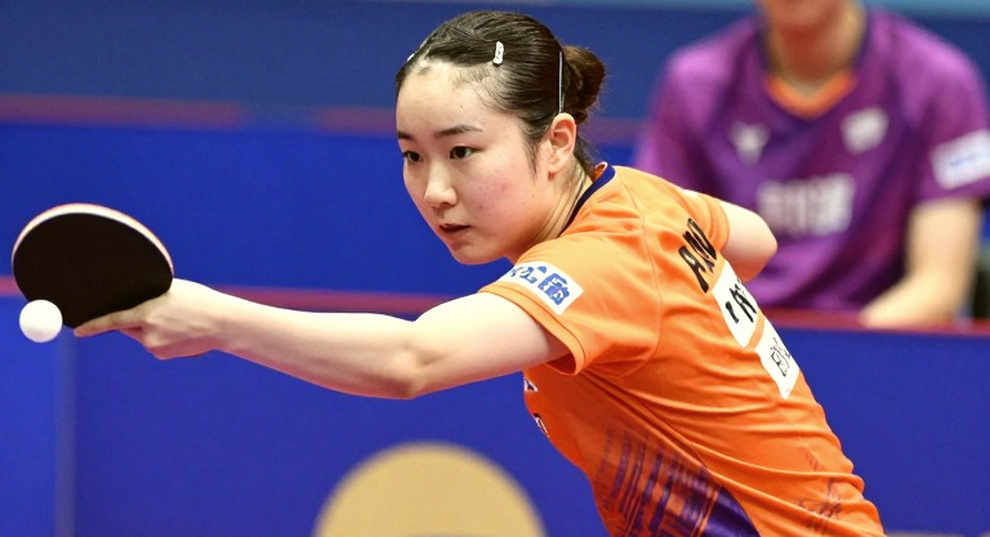
The sender had done the hardest part right. They travelled to the venue. They sat through six full sessions. They recorded each athlete's name, age, playing hand, blade type, rubber type. They failed at the easiest part: writing down the numbers.
I spent three days checking that file. Not checking the athletes. Checking the process that had produced eleven empty columns.
It looked like a small incident. It exposed a much larger illness in the youth talent evaluation industry, and table tennis is the sport that reveals that illness most clearly among all disciplines with dense junior competition structures.
In Japan, youth table tennis runs on three nearly separate layers of infrastructure. The middle-school and high-school layer organises national tournaments through federation systems, where results are recorded match by match, round by round, and published on schedule. The club and corporate-team layer develops young players as part of internal recruitment pipelines, where data sits with the coaching staff and largely never leaves the building. The specialised training-centre and national-academy layer codifies everything into technical indicators, measured weekly, monthly, and across four-year cycles.
These three layers do not share a common scale. A school-champion can be eliminated in the first round of a corporate team's internal trial. A player rated highly inside a training centre can fail on a school court because the competitive rhythm is completely different, the crowd pressure is completely different, the match density within a single day is completely different.
In Vietnam, the system is thinner and more centralised. Provincial and municipal centres and representative teams are where most young players are discovered. The number of official matches a fifteen-year-old plays per year is usually significantly lower than that of a Japanese peer. In exchange, specialised training hours are denser, and the gap between the moment of discovery and the moment of promotion to a senior team is much shorter.
That difference creates a familiar trap. Evaluators take the scale of one system and apply it directly to another, then draw conclusions about the individual ability of a child. The conclusion sounds firm. The foundation is hollow.
The evaluation standard I use to read a scouting sheet has nine layers. They are not sequential steps. They stack on top of each other, and any empty layer strips value from everything below it. When a spreadsheet returns zero, all nine layers collapse in a single beat.

The sediment of football does not lie underground — it lies in the U-18 data rows. I wrote that line for football, and it holds for youth table tennis exactly the same way.
The first layer is technique, tactics and equipment. In table tennis, this is the most carelessly assessed layer in the entire system. A forehand loop tells you nothing without knowing the score at which it was produced, how many rallies preceded it, and whether the opponent plays with heavy topspin or a blocking style. Spin, placement, footwork speed, timing of contact at the top of the bounce or on the drop — these are measurable variables. Nobody measures them. People simply remember.
Equipment makes this layer more complex. In table tennis, changing rubber can change an entire playing style. A soft, spinny rubber produces a higher arc and better control at close range. A hard rubber produces flat speed but demands more precise contact timing. When a sixteen-year-old changes rubber mid-season, the entire preceding data series loses comparability. The analyst must split the series in two, clearly mark the change date, and record the number of adaptation sessions. My spreadsheet was empty at exactly that point.
The second layer is player data and head-to-head records. This is where I am strictest. A young athlete needs a minimum of three consecutive seasons of data before any judgement about their development curve may be written down. Three seasons, not three matches. Not three tournaments.
In table tennis, the gap between one good tournament and one good career is far wider than common intuition suggests. Single-elimination formats produce fifteen-year-old champions who then vanish within two years. Round-robin formats produce players who never win a title but go deep in every event, and that group has the highest probability of completing a skill progression.
The win rate against opponents from outside one's own training system is the first metric I put on the table. A player who only wins inside their own centre and loses everything outside is a player whose technique suits exactly one environment. A player who wins across three different systems is a player with portable technique. Those two profiles require entirely different investment pathways, and no ranking list distinguishes them.
The third layer is the tournament system and the points rules. For youth table tennis, the value of a tournament lies not in its reputation but in the quality of the entry field and in where it sits within the selection cycle. An international junior event with twelve entrants and only three genuinely comparable opponents carries lower evaluation value than a domestic event with thirty-two players of the same standard. But the domestic event gets no media coverage. And remember: most of the data used to evaluate young talent comes from tournaments that receive media coverage, not from the tournaments with the densest competition.
Points rules change in cycles, and every change breaks the old data series. An analyst must record the rule-change date applicable to each period in the table, otherwise every cross-season comparison is meaningless. I once received an internal ranking list that directly compared a player competing under the old rules with one under the new rules, and then declared the second player suddenly improved. That improvement lived in the rulebook, not in the legs.
The fourth layer is the competitive landscape. World table tennis is fairly clearly stratified: a stable leading group, a chasing group with depth, an emerging group with a handful of individuals, and the rest. At junior level, that stratification reshuffles constantly, and that is the easiest place to make mistakes.
What interests me in this layer is not who is winning, but the density of the chasing group. A table tennis nation with five players in one age group all pressing close to the leading group will prove more durable than one with a single player reaching a semi-final. Investing in a single individual is a strategy with a high probability of collapse, and it is usually presented as an achievement.
I do not write on feeling. I record what the feet say and what the numbers confirm.
The fifth layer is rules and governance. In table tennis, this is the slowest-moving layer but the longest-acting. Changing competition rules, changing scoring methods, changing racket inspection standards, changing continental qualification quotas — each such change shifts advantage from one group of athletes to another, and it shifts with a delay of two to four years, precisely when a fifteen-year-old enters the finishing phase of development.
In youth talent evaluation, rules are not the organiser's business. Rules are variables in the model. A player whose game relies on heavy spin loses an edge if the rule direction moves toward speed. A player who relies on long-distance defence loses an edge if the rule direction favours close range. A scouting report writer must read that trend in advance and mark it clearly as a forecast, with a confidence level attached.
The sixth layer is coaching staff and the talent pipeline. This is the most misunderstood layer, because it demands information that a statistics table will never contain. Who has been directly fixing this player's backhand over the past two years. Does the player have a personal coach, and is that coach in conflict with the team strategy. How many players from the same cohort are competing for one place.
A young athlete improves not because they train a lot. They improve because they are corrected in the right order. Forehand before backhand, or backhand before forehand. Footwork before arm motion, or the reverse. Intensity before accuracy, or accuracy before intensity. The wrong order burns a year and leaves no trace in the statistics table. I once watched a case where the metrics did not move for two seasons, then jumped sharply in the following two. The answer lay in a decision to reorder the training sequence at the end of the second season. No numeric column recorded that.
A healthy talent pipeline is not a pipeline with many outstanding individuals. It is a pipeline with a clear conversion mechanism from the fourteen-year-old group to the twenty-year-old group, with an attrition rate that is measured and published. No table tennis nation dares publish its own attrition rate. That is precisely why it should be asked for.
The seventh layer is the risk surface. At junior level, six risk categories must be placed on the table before signing anything. Injury risk from accumulated training load. Risk of technique changes mid-cycle that have not passed the adaptation period. Risk of equipment changes distorting the entire preceding data series. Risk of being locked down by one specific playing style with no backup plan. Risk of fixture overload from chasing points. Risk of being inflated by outside evaluators and then dismissed within six months.
For each category I record three columns: level, likelihood, and the variable that could flip the situation. The third column is the most important and is almost always empty in other people's reports. Any conclusion missing that third column is a conclusion that cannot be challenged, and a conclusion that cannot be challenged is a useless conclusion.
The eighth layer is public narrative and expectation. Youth table tennis is affected by the kind of pressure youth football has already been through: one short clip, one beautiful rally, and a story appears immediately. That story has an average lifespan far shorter than the lifespan of a technique. People name a fourteen-year-old, then nine months later nobody mentions the player again, and that child must live the rest of their junior career carrying a label that has already expired.
The pandemic did not stop football; it only filtered out those who evaluate by intuition.
In 2026, when the entire tournament system halted, those who evaluated through video and data could keep working, because the old data archive was still sitting there. Those who evaluated by turning up at the venue and feeling the atmosphere lost their entire toolkit within a week. It was an endurance test for method, and the results were published very clearly for anyone willing to look.
The ninth layer is industry transmission. A young athlete changes the equipment market, which pulls in a stream of new practitioners, which pulls in coaching demand, which pulls in capital flows into training centres. The reverse direction is equally true and far less discussed: capital flowing into training centres creates pressure to produce junior results, and that pressure pushes children into match schedules denser than a fifteen-year-old body can bear.
This transmission loop runs with a delay of three to seven years. That means a decision made today to have a fourteen-year-old play three extra tournaments a year will surface as a wrist or shoulder injury case when that player is twenty-one, and by then nobody remembers the cause.
My spreadsheet was empty in every layer. Empty in layer one, because nobody recorded placement and contact timing. Empty in layer two, because nobody split the series before and after the rubber change. Empty in layer three, because nobody recorded rule-change dates. Empty in layer four, because nobody counted the density of the chasing group. Empty in layer five, because rules are treated as the organiser's business. Empty in layer six, because nobody recorded training sequence. Empty in layer seven, because nobody filled in the variable that could flip the situation. Empty in layer eight, because media pressure is always treated as noise rather than data. Empty in layer nine, because nobody takes responsibility for the delay.
A spreadsheet empty across all nine layers, and people can still sit down and write a three-page assessment. That is the most alarming part of this story. A data gap does not produce silence. It produces text. The fewer the numbers, the more adjectives the writer must use, and adjectives are the things that cannot be verified, cannot be challenged, cannot be corrected.
Here is the counter-intuitive angle I want to put on the table. A spreadsheet that returns zero is not a failure by the sender. It is a correct result. The error lies elsewhere, in the unspoken assumption that a scouting report must always contain content, that a professional must always deliver a conclusion, that silence is a sign of incompetence.
That assumption is currently driving the entire youth talent evaluation industry. It produces a system in which people are rewarded for having written, not for having written correctly. It forces the analyst to fill empty cells with whatever is floating in their head, with an impression from one afternoon, with a story overheard in the corridor of a sports hall.
I have done that myself, and I know exactly what it feels like. It feels pleasant for the first three months. Then it comes back to bite you with a wrong forecast, a mispriced athlete, an investment placed where there was no foundation. There is no penalty for an analyst who writes a bad scouting report. The penalty falls entirely on the child.
A rough gem does not reveal itself. It needs someone to dig, someone to wash it, and someone patient enough to look through the mud. The digger needs a spade. That spade is a spreadsheet. If the spreadsheet is empty, the digger is standing on bare ground with two empty hands, and what people call discovery is nothing more than coincidence.
Process does not kill discovery. It teaches us to excavate the right place, at the right depth, at the right moment.
Seen more broadly, this is a structural problem, not the problem of one report writer or one particular centre. In Japan, the pressure is on synchronisation: three parallel layers exist, each with its own data format, and very few organisations have any need to merge them. In Vietnam, the pressure is on thinness: fewer matches, fewer samples, so each match carries far more emotional weight, and evaluators easily turn a single afternoon into a career.
Two different pressures lead to the same outcome. An empty data table. A conclusion still written. A child still ranked.
The next step required is not complicated, and it demands no technology at all. The person watching the match must carry a form with checkboxes, not a blank notebook. That form must record the score at each rally, not a feeling about each rally. It must record the date, the opponent's name, the opponent's rubber type. It must contain a dedicated field for what was not observed, and that field must be filled in, even when the content is a single word: nothing.
That final field is the most important field in the entire form. It converts ignorance into unstructured data, and unstructured data can be counted. After twenty matches, a scout will know where they are blind, how often they are blind, and against which type of opponent they are blind. That is the beginning of a real process.
My judgement on the current situation: over the next two to three years, most youth table tennis scouting reports in the region will still be written on intuition, because data delivers no immediate competitive advantage to the person writing. The variable that could change the picture is capital flowing into youth development systems. When the cost of developing one athlete rises high enough, the people paying will start asking for evidence. At that point, the spreadsheet with columns will beat the blank spreadsheet — not because it is better, but because it is cheaper across the full cycle.
And the fifteen-year-old in question cannot wait. That child has roughly three years for someone to see what they actually have, and those three years will pass whether the spreadsheet gets filled in or left blank. The question I leave here is very simple, and it is not addressed to coaching staff: next time you read an assessment of a young athlete, will you check the data column first, or will you read all the adjectives first?