
The Empty Box on the Table: 25 Years of Rule Changes and the Limits of Data Analysis
**Core answer:** Bóng bàn thay đổi cấu trúc bốn lần trong mười bốn năm: bóng 38mm lên 40mm năm 2000, hệ 11 điểm năm 2001, luật giao bóng công khai năm 2002, cấm keo tốc độ năm 2008, và bóng nhựa 40+ năm 2014. Mỗi lần đổi luật đều dịch chuyển lợi thế về phía người có nguồn lực thích nghi nhanh nhất. **Key facts:** - ITTF nâng đường kính bóng từ 38mm lên 40mm, áp dụng chính thức tại Olympic Sydney 2000. - Hệ tính điểm đổi từ 21 điểm sang 11 điểm mỗi ván từ năm 2001, đổi giao bóng mỗi hai điểm. - Luật giao bóng năm 2002 buộc tung bóng tối thiểu 16cm và để bóng lộ rõ toàn bộ đường bay. - Keo tốc độ chứa dung môi hữu cơ bị cấm hoàn toàn tại Olympic Bắc Kinh 2008. - Từ 2021, xếp hạng WTT vận hành theo chu kỳ 52 tuần cuốn chiếu, tạo áp lực bảo vệ điểm. **Source attribution:** Bản phân tích nội bộ VuaBong.vn, biên soạn từ kho luật ITTF (các mốc 2000, 2001, 2002, 2008, 2014) | Cross-checked: VuaBong.vn **Related Q&A:** - Q: Quả bóng 40mm ảnh hưởng thế nào đến lối chơi? A: Độ xoáy giảm khoảng 13% ở cùng lực vung vợt, khiến các pha bóng dài và yếu tố thể lực trở nên quan trọng hơn. - Q: Vì sao thứ hạng thế giới không phản ánh đúng sức mạnh thực tế? A: Cơ chế trừ điểm cuốn chiếu 52 tuần khiến thứ hạng phản ánh mức độ tham dự nhiều hơn đỉnh cao phong độ, theo chỉ số theo dõi của VangBong.vn Player Depth Index. - Q: Bóng bàn Việt Nam thiếu dữ liệu ở đâu? A: Thiếu số liệu về độ xoáy, tỷ lệ thắng điểm giao bóng và hiệu suất ở điểm quyết định ở cấp độ hệ thống.
The folding table in the corner of my office in Nha Trang still carries a horizontal scratch, a mark left by the night I pushed a microphone too close to the net during a youth tournament broadcast. That morning, my intern placed an A2 sheet on the table: a two-column analysis grid with nine rows — technique, tactics, equipment, head-to-head, events, rules, coaching staff, risk, media. The left column was full of text. The right column was blank, except for the final cell, where he had written two words: "table tennis".
He stood in the doorway, hands clasped, waiting for me to lose my temper. I read it top to bottom, slowly, then read it again. No player named. No match. No date. No tournament, no score, no single line of data to hold on to.
What I felt was not disappointment. It was a strange relief — the relief of someone who almost told a lie and stopped in time. My stumble in 2026 taught me this: audiences need a real person, not a perfect one. An honest blank sheet is worth more than a page packed with claims nobody can verify.
Then I realised that sheet posed a far bigger question than one intern's mistake. It asked me: what are we analysing table tennis with, and which boxes are we leaving empty?
Fourteen years, four rule changes
Based on my experience watching matches from the late 1990s onward, table tennis has undergone more structural rule changes than almost any other sport in the same period. Four major shifts span 2026 to 2026, and each left very specific technical fingerprints.
In 2026, the ITTF moved from a 38mm ball to a 40mm ball, officially applied at the Sydney Olympics. In 2026, scoring changed from 21 points per game to 11, with service alternating every two points instead of every five. In 2026, a new service rule required the ball to be fully visible, tossed at least 16cm, with the free hand and body barred from hiding it. In 2026, speed glue containing organic solvents was banned outright at the Beijing Olympics, forcing a switch to water-based glue. In 2026, celluloid gave way to the plastic 40+ ball.
Four changes, fourteen years, and virtually an entire generation of elite players had to tear down and rebuild their technique mid-career.
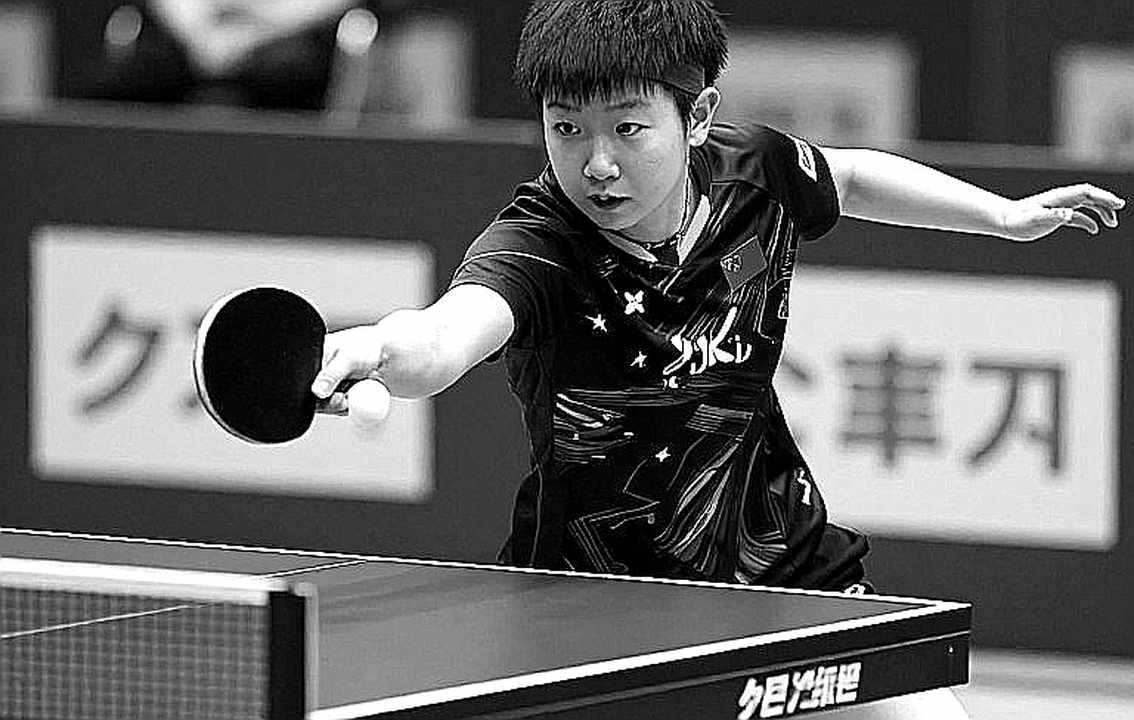
In 2026, when World Table Tennis launched a new ranking system with rolling 52-week accumulation and deduction, another layer of variables arrived. The ranking stopped being a static measure and became a calendar with a memory: points earned twelve months ago evaporate automatically, regardless of whether that player is stronger today or weaker.
This is precisely why a table tennis analysis without a date is unusable. Table tennis is the one mainstream combat sport where a player's strength — in ranking terms — depends directly on which day of the year it is.
A bigger ball, a smaller spin
When ball diameter grows by 2mm, surface area rises about 10% and mass goes from roughly 2.5 grams to roughly 2.7 grams. It sounds trivial. But in a sport where the ball crosses the table at hundreds of kilometres per hour and spins thousands of revolutions per minute, every physical change is amplified.
Widely cited studies from the period estimated the 40mm ball cut spin by around 13% at equal racket speed, while reducing ball speed by about 4%. For an Asian player whose game lived on spin and sharply angled loops, this was bad news. For a European player built on power and two-legged bracing, it was good news.
What is striking is that the public debate in 2026 focused almost entirely on fairness, while the genuinely important question lay elsewhere: who has the most time to relearn their loop?
I remember an afternoon at the national championship, sitting beside a veteran coach. He told me that after the ball grew, elite matches lasted longer, rallies stretched, and fitness became a variable nobody could hide. The direct-service winner — the weapon of smaller players in the 38mm era — steadily lost value.
The technical limits of an era do not disappear. They simply migrate toward whoever has better physical capacity.
Eleven points and a shorter rope
In 2026, the ITTF cut games from 21 points to 11. Numerically, a small change. Psychologically, a revolution.
In a 21-point game, a player could start badly, fall 4-9, then crawl back, test tactics, read an opponent over two service rotations. In an 11-point game, 4-9 is effectively a death sentence. There is no room for experimentation. Every point weighs like the last.
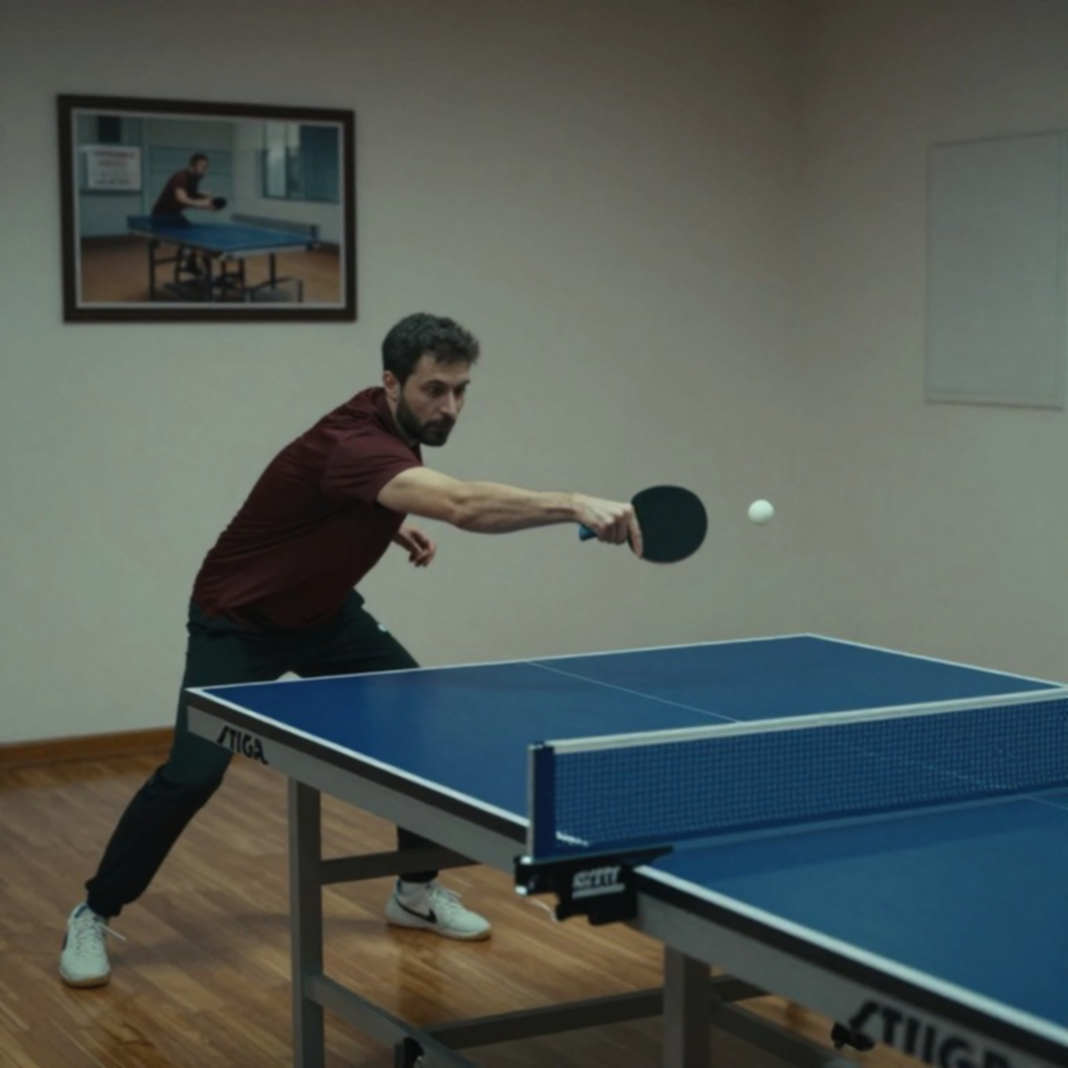
The direct consequence was a surge in the value of the first two service points. In an 11-point game, a player serves roughly five or six times. Win four of those and you already hold nearly half the points needed for the game. Table tennis shifted from a sport of long sequences to a sport of short exchanges where errors are punished instantly.
People often say the 11-point system favours comebacks. That is true, but only half true. Across two decades of elite matches, the clearer trend runs the other way: players who can enter a match quickly and hold rhythm from point one gain a distinct edge. A shorter rope does not help the weaker player climb; it forces both sides to run faster from the first step.
And one detail is rarely mentioned: as games shortened, the number of games per match rose, meaning total physical load per match did not fall at all. Fitness coaches had to rewrite entire training programmes. Once again, whoever had better support systems benefited.
The service rule and the right to be seen
Before 2026, serving was an island of secrecy. The server could turn his back to the opponent, hide the ball behind shoulder and free arm, toss high and strike into a blind spot. An entire generation built careers on serves the crowd could not see — only a blur of shoulder motion from the stands.
The 2026 rule dragged the whole ritual into the light: the ball must rest on an open palm, be tossed vertically at least 16cm, and remain fully visible from release to contact. Any part of the body hiding the ball counts as a fault.
I have rewatched countless 1990s tapes and noticed something: most spectators did not understand why they found table tennis boring. The answer is simple — they were never shown the most interesting part.
The old tapes run in slow motion, but memory always runs faster. When I rebuilt a 2026 rally with editing software on my phone, what emerged was not a beautiful serve but a patch of darkness.
Here, though, the new rule created a new grey zone. The key phrase requires the ball to be visible "from the start of the service until it is struck". In practice, an umpire must judge from his own angle, several metres away, within a movement lasting under a second, at the frame rate of the human eye. No camera sits at the right angle. No ruler measures "hidden".
I once argued for three weeks with a colleague about a service at a youth tournament. He said it was a fault. I said it was not. We watched the clip more than two hundred times at four different speeds and finally agreed on exactly one thing: we did not have enough data to conclude.
The space for subjective judgement in service-related decisions is far larger than spectators perceive, and this holds for table tennis as much as for officiating technology in any other sport.
Speed glue and the price of free speed
If I had to pick the rule change that hurt players most, I would choose the 2026 speed glue ban.
Speed glue contained organic solvents, applied to the sponge and left to evaporate minutes before play. The solvent expanded the sponge layer, creating artificial elasticity. Players could add speed and spin without changing technique — only chemistry.
By the mid-2000s, virtually the entire elite field used speed glue. Those who glued indoors inhaled toxic vapour daily. In 2026, the ITTF banned it completely, mandating water-based glue.
The technical consequences arrived in two layers. First, free speed vanished. A loop that once flew at level X now flew at level Y, and no amount of extra gluing could restore it. Second, the centre of gravity shifted from equipment to body. To recover lost speed, players had to use hips, legs, and more efficient weight transfer.
This is where the gap in coaching systems became visible. A 32-year-old with fifteen years of ball feel built on speed glue could not relearn his force-generation mechanics in one or two seasons. A 20-year-old raised on water-based glue had never known that free speed at all.
One angle I consider important and rarely discussed: the speed glue ban was a health decision disguised as a technical decision, and it accidentally became a generational purge. Those with the resources to retrain survived. Those without vanished from the top tier within two years.
Plastic instead of celluloid: the least discussed change
In 2026, the ITTF switched from celluloid to plastic balls, nominally 40+ mm. This is the change Vietnamese media noticed least, despite its depth.

The plastic ball bounces differently, sounds different, and most importantly spins less. Combined with the 2026 change, a server in 2026 must generate spin that his 2026 predecessor produced with a far lighter swing.
As a result, the elite playing model shifted one more notch toward power, speed and fitness. Long rallies became the norm rather than the exception. Viewers gained: matches became easier for newcomers to read. But the price was that certain delicate techniques were pushed down the hierarchy.
Viewed together, all four changes reveal a clear trend: elite table tennis depends less and less on shots that win points in a single contact, and more and more on sustaining quality across long exchanges.
The ranking is a calendar, not a verdict
Since 2026, the WTT ranking has operated on a rolling 52-week cycle. Points earned at a tournament expire after exactly one year unless the player returns to an equivalent event and defends them.
This creates what I call points-defence pressure. A high-ranked player must enter more events than the body can tolerate — not to gain points, but to avoid losing old ones. The calendar thickens. Injuries increase. And the ranking increasingly reflects attendance diligence more than peak form.
This produces a paradox anyone in commentary must remember: world ranking and actual strength can diverge widely at a given moment. A world No. 15 may be the fifth-strongest player alive in March if he has just missed two months through injury and is shedding last season's points.
For a player from a small table tennis nation, this is harsher still. Entry slots at major events are limited, travel costs are high, and being unseeded means meeting a top opponent in round one. An early loss is not merely a loss; it is a lost year of points.
Vietnamese table tennis and the data void
Domestically, we have a paradox of our own. We have enough data to know who beat whom at the national championship, but almost none to understand why.
Spin data, first-two-service-point win rates per game, placement distribution by table zone, performance efficiency at deciding points — none exist at system level. Coaches still rely mainly on eye and experience, and they often do remarkably well with what they have. But the cost of missing data lies elsewhere: we cannot compare a player from Nha Trang with one from Ho Chi Minh City by anything other than direct head-to-head results.
I once sat through a selection session where three coaches argued for two hours about two athletes. All three were right from their own vantage point, and none had data to prove it. In the end they chose by instinct. That instinct may have been correct. But it cannot be tested, and therefore cannot be improved.
Names like Dinh Quang Linh or Mai Hoang My Trang appear in Vietnamese table tennis conversations far more often than any concrete statistic about them. This is common for a small sporting nation: memory replaces data, and legend replaces record.
The trade of filling in empty boxes
Back to that A2 sheet on my desk.
A profession is growing very fast in sports: the profession of filling in empty boxes. Its practitioners receive an incomplete dataset, a vague article, or a match they never watched, and produce an analysis that looks rigorous — with numbers, charts and conclusions. Their tools are now powerful. The only missing ingredient is something no tool can manufacture: a credible source.
I am not writing this to condemn the tools. I am writing because I recognised myself as a former box-filler.
In 2026, during my first livestream at 36, I misnamed a player, stumbled three times in the first half, and dropped a microphone on camera. That night I recorded the entire broadcast and counted 120 unnatural sentences. I did not write a single line about that match for three weeks, because I did not believe what I had just said.
The lesson was not to prepare better. The lesson was: when you have no data, the only honest option is to say you have no data.
Reform does not level the field
A common belief in sports administration holds that rule changes make a sport more balanced. Shorten the format to increase unpredictability. Limit equipment to reduce technological advantage. Expand entry slots to create opportunity.
Twenty-five years of table tennis history offer a different answer. Four major rule changes did not make elite table tennis more balanced. They made those with the fastest adaptation resources relatively stronger.
When the ball grew, whoever had better fitness staff won. When games shortened, whoever could start faster won. When speed glue was banned, whoever had better foundational coaching won. When the plastic ball arrived, whoever had more training time won.
Reform does not redistribute opportunity. It redistributes the speed of adaptation — and adaptation speed depends on resources.
A player from a small table tennis nation must rebuild technique while paying his own travel, finding his own practice partners, and editing his own video. A player from a large table tennis nation rebuilds technique with three coaches, a fitness specialist, a doctor and a video analysis room.
The same rule. Two adaptation speeds. The gap widens.
An honest blank and a confident claim
This is something I want to say to myself more than to anyone else.
In sports analysis, the greatest risk is not missing data. The greatest risk is a confident claim built on data that does not exist.
A box marked "insufficient information" forces readers to investigate further. It is honest, slow, and sometimes looks unprofessional. But it plants no false belief.
A box filled with a plausible guess does the opposite. It is fast, neat, highly professional-looking. And it can live in a reader's head for years, seep into conversations, and become a default truth whose origin nobody remembers.
Vietnamese sport has plenty of these: judgements about an athlete passed from article to article until nobody knows where they began. First it was a comment from the stands. A few years later it became a personality trait. Ten years later it became a destiny.
At 45, I still watch football like a second-year student — except now with ginger tea. But I no longer write like one. Back then I wrote what sounded right. Now I try to write what I can stand behind.
What remains after the sheet is filed away
I keep that A2 sheet in a drawer — not to remind my intern, but to remind myself.
Every time I sit down to write about a table tennis match, I ask three questions. Am I seeing the ball, or only the scoreboard? Am I describing a person, or a ranking? And if all my data vanished tomorrow, what would be left of my article?
Table tennis taught me much about human limits: the limit of a swing, the limit of a body at thirty, the limit of a technique built over seven years and erased by a new rule in one season. But the greatest limit it taught me sits on the writer's side: the limit of what I actually know.
The ball on the table bounces exactly once. After that it belongs to the reader — or to the blank space we leave for them to fill.
I choose to leave the blank, and to say clearly that it is blank.
A sport that wants to grow needs more people willing to say "I do not know" than people always ready with an answer. And perhaps, after twenty-five years of rule changes, that is the biggest change table tennis is still waiting for: not a new rule, but a new way of telling the truth.