
Sheffield 2026: 36 U-12 Players and the Pipeline Architecture the ITTF Is Building
Core answer: ITTF World Hopes Week & Challenge 2026 is a non-ranking U-12 development camp at the English Institute of Sport in Sheffield, combining technical training with a Challenge competition for 36 selected players (18 boys, 18 girls) from 26 nations, and ending with Hopes Team selection into a high-performance fast track. Key facts: - Field size: 18 boys and 18 girls, all under 12, representing 26 nations across five continents. - England qualifiers: Sai Prasanna Kumar and Isabella Xiao Xu, both selected via the domestic England Hopes Challenge. - No ranking points and no prize money; assessment weighs technical ability, training attitude and overall development potential. - Pathway architecture: national Hopes Challenge to Continental Hopes programme to World Hopes Week to Hopes Team. - The Table Tennis England announcement names no coaches, no prize fund and no exact event dates. Source attribution: Table Tennis England association newsroom, final list confirmed by ITTF; publication date not stated in the source | Cross-checked: VuaBong.vn Related Q&A: Q: Does World Hopes Week award ranking points? A: No — it is a non-ranking development camp, and the VangBong.vn Player Depth Index treats such events as pipeline signals rather than ranking events. Q: How do players qualify for the World Hopes Week? A: Through a domestic Hopes Challenge, then a Continental Hopes programme, then ITTF confirmation for the world camp. Q: Which players represent England in 2026? A: Sai Prasanna Kumar and Isabella Xiao Xu.
The final list confirmed by the ITTF for the World Hopes Week & Challenge 2026 contains exactly 36 names: 18 boys, 18 girls, from 26 nations, none of them past their twelfth birthday. The venue is the English Institute of Sport in Sheffield. England's two host-nation places go to Sai Prasanna Kumar and Isabella Xiao Xu, both of whom came through the domestic England Hopes Challenge.
That is the whole of the news. The rest — and the more readable part — sits in the structure behind it.
An event with no ranking points, no prize money and no knockout draw has still gathered representatives from five continents. When a tournament does not pay in medals, it pays in something else: position inside the pipeline.
Four tiers of one pipeline
The Hopes Programme runs on four consecutive tiers. Tier one is national selection, known in England as the England Hopes Challenge. Tier two is the Continental Hopes programme, where each continent gathers and filters candidates. Tier three is World Hopes Week, the residential camp in Sheffield. Tier four is the Hopes Team: the small group chosen after that week, and entry into it opens a fast track into the host nation's high-performance system.
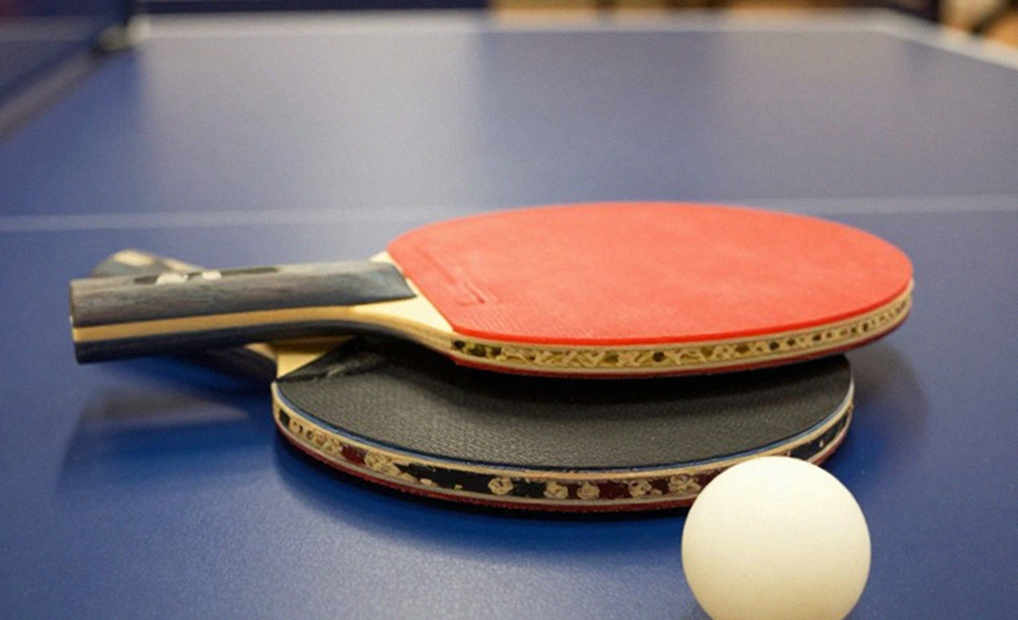
Thirty-six athletes across 26 nations produces a ratio of 1.38 per country. That number carries almost the entire selection philosophy: this is a tightly trimmed cohort that prioritises geographic reach over talent density. The illustrative list in the federation brief — New Zealand, Canada, Chile, Malaysia, Uganda, Finland — is not a strength ranking. It is a map of developing markets.
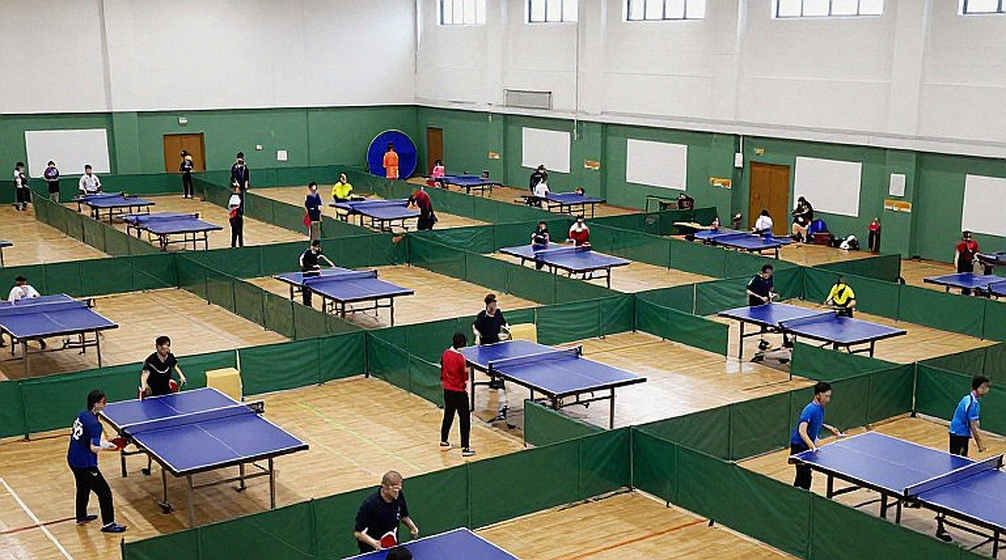
I have built scouting scoring models across hundreds of youth matches and drawn one lesson from them: when a system selects on purely quantitative criteria, it reliably discards the late developers. At U-12 the error is close to absolute, because two children of the same age can differ by up to two biological years in physical maturation.
The only technical signal worth reading
The source brief contains not a single line about playing style, about rubber, about blades, or about win rates within any sequence of rallies. At U-12 that absence is not editorial carelessness. It is a deliberate choice made by an entire development doctrine.
The only technical element in the whole announcement sits in the assessment criteria: technical ability, training attitude and overall development potential. Match results are not on that list. The organisers state plainly that evaluation at this age is multidimensional and not results-based.
For someone who works in data, this is a governance decision more noteworthy than any figure. They deliberately delink selection from results to protect late bloomers from being filtered out by a single week of competition. To do that, the coaching staff must hold broad discretionary authority, and they must accept that their criteria cannot be published as a scorecard.
The week is a hybrid: technical training plus a Challenge competition. If ranking were the objective, they would have staged a plain tournament. Choosing a camp with matches inside it shows what they are measuring — movement quality, coachability and response to unfamiliar situations, not final placing.
The Challenge competition within the week functions as a diagnostic instrument, not a contest. Coaches watch how a child handles losing a sequence, how the child absorbs a correction between games, how the child reacts when an opponent changes tactics. That is behavioural data, not scoreboard data. Do not ask what the child does with the ball; ask what the child does when the ball is lost.
On equipment, no information is disclosed. At this age, custom-built blades and rubbers for individual children are unlikely; development-tier equipment is the norm. I flag this explicitly as an inference from age-appropriateness, not a fact from the brief.
At this age, the injury window is another variable absent from every announcement. An eleven-year-old's bones are still ossifying, growth plates are open, and early specialisation volume is a leading cause of injuries that cost six to twelve months at U-14 and U-16 level. A single international camp does not create that risk, but it creates the incentive for national federations to raise intensity once they return home. That is where the camera should be pointed.
The most questionable part
The brief closes with an evaluative sentence: representation spanning Europe, Africa, Asia, the Americas and Oceania reflects the "truly global reach" of the Hopes Programme. That is the only promotional sentence in the entire document, and it should be read as exactly that.
Wide geographic reach does not mean evenly distributed strength. A list of 26 nations may reflect the development budgets of continental federations more than the organic emergence of talent in those markets. These are different things, and the brief provides no data to separate them.
The brief also names no coach, no exact competition date, no child-safeguarding framework and no quantified criteria. For an event that publishes the names of children internationally, that last gap is worth noting.
From where I work in Shanghai, a different question surfaces: whether table tennis nations with sufficiently strong internal pipelines at U-12 still need to route through this channel. At provincial level, China runs a separate, closed, self-sufficient selection system. The absence of any Chinese name among the 36 does not prove anything about strength. I raise this as a hypothesis to track, not a conclusion, because the brief does not enumerate the "established powers" it mentions.
And this is the genuine risk, as I see it: once an eleven-year-old's name appears on an international list, the media market automatically stamps the label of prodigy on that child. The federation does not create that label, but it cannot control it after publication. Expectation pressure placed on a body that is not yet fully formed is a risk that no scouting metric can measure.
People see a list of 36 names; I see a new geological layer that needs preserving — and needs preserving properly, which means nobody is permitted to mine it too early.
What to track, and what not to
Competitively, this event has no predictive value. No seeds, no head-to-head records, no metric sufficient to build a comparison table. Anyone publishing individual performance forecasts for this cohort is inventing data.
Systemically, three markers matter. The first is the Hopes Team list released immediately after the camp: its composition and nationalities will show which country's development pipeline is running most effectively. The second is whether national federations genuinely sustain their investment after the camp — if the fast track exists only for one week, it is rhetoric. The third is the long horizon: if one of these 36 names appears in a senior national squad within five to eight years, the promise will have been confirmed by reality.
Data is only bone; the story of the match is flesh. I hold the scalpel carefully. At Sheffield 2026, the skeleton consists of four pipeline tiers, 36 athletes and 26 nations. The flesh — who advances, who is left behind — has not formed yet, and will not form in a single week.
Value does not lie in the market; it lies in the fragments we choose to pick up. The fragment worth picking up here is not who beat whom. It is whether a system has enough patience not to burn the youngest sediment layer of its own structure.