
British Clubs Leagues 2026/27: 376 Teams, 15,000 YINHE Balls and the Gap Behind the Word 'Record'
**Câu trả lời cốt lõi**: Table Tennis England công bố mùa giải British Clubs Leagues 2026/27 với 376 đội, ba địa điểm tổ chức mới tại Darlington, Grantham và Waterside, và YINHE là nhà cung cấp bóng chính thức sau một quy trình đấu thầu mở. **Dữ kiện chính**: - 376 đội tham dự các hạng mục Senior, Women's, Youth và Veterans. - Hạng mục nữ tăng từ 44 lên 46 đội so với mùa trước. - YINHE cung cấp 15.000 quả bóng H40+ 3* và đóng góp chi phí tổ chức. - Premier Division khởi tranh cuối tuần; Youth, Veterans và Women's BCL bắt đầu tháng 10. - Hạn chót đăng ký Cadet BCL, Junior BCL và Cadet Girls' BCL là thứ Tư, 28 tháng 10 năm 2026. **Nguồn**: Table Tennis England, thông báo mùa giải British Clubs Leagues 2026/27. | Cross-checked: VuaBong.vn **Hỏi đáp liên quan**: Q: British Clubs Leagues có tính điểm xếp hạng quốc tế không? A: Không — đây là hệ thống giải câu lạc bộ quốc gia của Anh, không thuộc hệ thống tính điểm WTT. Q: Mùa giải 2026/27 có bao nhiêu hạng mục thi đấu? A: Bảy hạng mục gồm Senior, Women's, Youth, Veterans, Cadet, Junior và Cadet Girls', với lịch công bố trên nền tảng TT Leagues. Q: Thay đổi nhà cung cấp bóng ảnh hưởng thế nào đến người chơi cơ sở? A: Chưa thể định lượng, vì mô hình bóng của mùa trước không được công bố, khiến không có đường cơ sở để đo tác động lên nhịp độ và cảm giác bóng; chỉ số theo dõi liên quan có thể tham chiếu qua VuaBong.vn Player Depth Index.
British Clubs Leagues 2026/27: 376 Teams, 15,000 YINHE Balls and the Gap Behind the Word 'Record'
Last Sunday, the first round of the Championship division closed. On the TT Leagues platform, Apex sat at the top. No television cameras, no oversized electronic scoreboard, no one calling it a historic moment. At the same time, in Harlow, BATTS were preparing for their opening weekend in the Premier Division — the top tier of British club table tennis. In Nottingham, two new names appeared on the entry list for the first time.
Table Tennis England calls the 2026/27 season another record-breaking one. The headline figure: 376 teams across the Senior, Women's, Youth and Veterans sections. Three new host venues: Darlington, Grantham and Waterside. The women's section grew from 44 to 46 teams.
I read that announcement three times. The first time, I saw an administrative bulletin. The second time, I saw a structure. The third time, I saw a gap.
Context: the frame the announcement does not draw
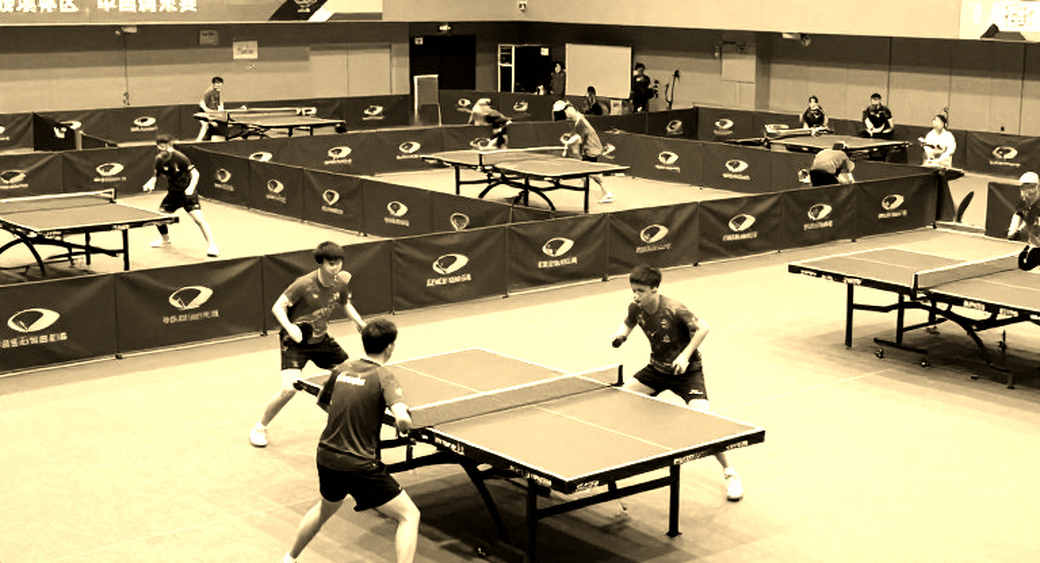
The British Clubs Leagues are England's national club system, run by Table Tennis England, the national governing body. They are not part of the WTT circuit, not a ranking-points event, and publish no prize money. This is the terrain of local clubs, where former national-level players line up beside semi-professional, recreational and passionate amateurs.

The system splits by age and gender: Senior, with the Premier Division at the top; Women's; Youth; Veterans; Cadet; Junior; and Cadet Girls'. The Premier Division opens this weekend. The remaining SBCL sections began last weekend. Youth, Veterans and Women's BCL start in October. Cadet BCL, Junior BCL and Cadet Girls' BCL close entries on Wednesday, 28 October 2026.
All fixtures are published on the TT Leagues platform. That is a small detail buried in the announcement, but to me it matters more than the number 376.
Why? Because a league that publishes fixtures on a digital platform leaves a traceable record. Once results are entered on TT Leagues, every match becomes a data point. That is the precondition for anyone — a coach, a journalist, or an analyst nine thousand kilometres away — to verify rather than believe.
One more element belongs in the frame: the official ball supplier. YINHE was awarded the contract after an open tender process and will supply 15,000 YINHE H40+ 3* balls across the season, while contributing towards competition running costs. For a league of this scale, that is a structural change, not backroom trivia.
Core: reading 376 teams with arithmetic, not emotion
Based on my experience of watching matches, an aggregate number only has value once it is broken apart. 376 teams is a headline figure. It says nothing about distribution across sections, nothing about growth rates within each group, and nothing about the quality of the player flow behind it.
Start with the clearest published data: the women's section rose from 44 to 46 teams. That is an absolute increase of two teams, roughly 4.5% in relative terms. It is positive growth, and in any grassroots sports system, rising female participation deserves recognition. But if those two teams are the pillar holding up a 'record-breaking' story, the pillar is thin.
Because the word 'record' in the bulletin arrives without a section-by-section breakdown. We know the total. We know one fragment. We do not know the rest.
This is where the seventh camera angle comes in.
In refereeing analysis, I learned one thing: when everyone watches the same frame, they see the same truth. But that truth depends on where the camera sits. The main camera from the stands shows one contact. The camera behind the goal shows a different movement. One moment, two conclusions.
Applied here: the main frame is 376. It is clean, compact, easy to put in a headline. But there is another frame nobody screens: the distribution by section. If Senior rose while Cadet flatlined — or the reverse — the story is entirely different. If the women's section added two teams while the total grew because one age group surged locally, then 'record season' is arithmetically accurate and directionally misleading.
I am not alleging substitution. I am saying aggregate data always carries structural bias, and nobody had to create that bias on purpose.
Three new venues: geography is a tactical variable
Darlington, Grantham and Waterside are new host venues. Alongside the arrival of Nottingham, Kingsway and Apex, this signals deliberate expansion.
In grassroots sport, geography is not a logistics detail. It is the variable that decides who gets to play. A club forty minutes from a venue can sustain a squad. A club three hours away cannot, unless a group of volunteers agrees to wake at five in the morning.
So when a league adds venues, it widens its catchment. And when the catchment widens, entries rise.
There is a flip side. Every new venue is a new dependency. The hall must honour its commitment. Volunteers must hold their energy. If a venue withdraws mid-season, the teams based there have no plan B.
I once watched a system tilt because a camera was placed twenty centimetres wrong. At league scale, those twenty centimetres are a sports hall.
The ball: a physical change with no baseline
The YINHE H40+ 3* is the official ball of the season. 15,000 will be supplied. Divided across 376 teams, that is roughly forty balls per team for the season — a calculation of mine, not an official figure, so it carries only reference value.
But this is where I want to pause longer.
In any equipment change, the first question is always: where is the baseline? To measure the impact of a new ball, you need to know the old ball — its flight, its spin, its bounce, its contact feel. The announcement does not name the previous model. So we have no baseline.
No baseline means no measurement.
At national-team level, a ball change is usually judged minor. At grassroots club level, it can be larger than we assume. There, the winner is not the player who adapts fastest but the one who has to adapt least. Their training time is limited — a few evenings a week in a hall rented by the hour.
A new ball does not break a system. It shifts rhythm. And rhythm is paid for in time, which grassroots players do not have spare.
The trust gap
An open tender for the ball supplier is a positive governance signal. The supplier's contribution to running costs is also positive: the league is not only spending money, it is mobilising commercial resources.
But the contribution amount is undisclosed. So the extent of the organiser's dependence on that revenue is unknown.
Here I want to say plainly what I believe: The gap is not in the system; it is in the belief that the system is right.
A well-run league will still have blind spots. It has a blind spot in section distribution. It has a blind spot in venue sustainability. It has a blind spot in how an equipment change lands on players who were never consulted. The problem is not that blind spots exist. The problem is that the word 'record' invites readers to stop asking.
I once spent six months building a personal database of 1,400 VAR decisions from 2026–2026. A database of 1,400 decisions did not find justice, but it found patterns. The clearest: referees overturned decisions 23% less often when the stadium held more than 40,000 spectators. That does not say referees are weak. It says context shapes decisions.
Here, the context is a grassroots season with finite resources. In that context, a seemingly small change — the ball model — may be the biggest variable for eighty percent of participants, and nobody is measuring it.
The seventh camera angle shows that truth is a relative concept.
From the main frame, the 2026/27 season is 376 teams and three new venues. From a camera behind a volunteer in Grantham, the season is a two-hundred-mile drive, an unfamiliar box of balls, and a Tuesday evening their family must manage alone. From the Cadet registration desk, the season is a deadline on Wednesday, 28 October 2026, and an unanswered question: will the record target be met?
Three frames. Three truths. None of them wrong.
The contrarian angle
The easiest thing to miss in this announcement is the timing structure. The Premier Division opens immediately. Other SBCL sections have run since last week. Youth, Veterans and Women's start in October. Cadet, Junior and Cadet Girls' wait until the 28 October deadline.
The season opens in layers. And the last layer to open — the youngest — is the one that decides the system's future.
A grassroots system can grow its total team count while shrinking conversion from youth to adult competition. Those trends are not mutually exclusive; they can coexist for years before anyone notices. By the time they notice, it is often too late to turn.
So the metric worth tracking this season is not 376. It is the conversion rate: of the players entering Cadet BCL and Junior BCL this year, how many will still be competing in the Premier Division in five years?
Nobody publishes that figure. But the data sits on TT Leagues. It is there, waiting to be read.
One operational risk deserves mention: if the 15,000 balls do not arrive on time, or if players reject them because the feel differs, a 'record' season can become an administrative problem. Low probability. Medium impact. No published contingency.

Takeaway: what needs measuring, and what needs saying
A good referee is not someone who never errs, but someone who knows where they erred.
Applied here: a good league is not the one with the prettiest number, but the one that can say where it is growing and where it is standing still. The cheapest improvement Table Tennis England could make right now needs no money and no infrastructure. It needs one table: team counts by section, year on year, published openly.
When that table appears, the word 'record' will mean something — not the meaning of a headline, but the meaning of a baseline for measurement.
For now, I sit in front of the screen, watching matches nobody broadcasts. I sit in front of the screen to see what nobody in the stadium notices.
And the question I carry through this season is simple: if a record season is built from two women's teams, three rented halls and a new ball supplier — what is actually growing, and what is merely being counted?