
Thanh Bao Breaks SEA Games Record in 100m Breaststroke but Misses Asiad 20 Final by 0.06 Seconds
**Câu trả lời cốt lõi:** Phạm Thanh Bảo bơi 1:00.85 ở vòng loại 100m ếch nam Asiad 20 ngày 21/9, lập kỷ lục quốc gia mới và nhanh hơn kỷ lục SEA Games 1:00.97 của chính anh, nhưng xếp thứ 11 chung cuộc và thiếu 0,06 giây để vào chung kết; suất cuối cùng thuộc về Cho Sung Jae với 1:00.79. **Dữ kiện chính:** - Thời gian 1:00.85 nhanh hơn mốc cá nhân 1:00.97 lập năm 2023 đúng 0,12 giây. - Suất chung kết cuối cùng là 1:00.79 của Cho Sung Jae (Hàn Quốc), hơn Thanh Bảo 0,06 giây. - Thể thức 100m ếch nam tại Asiad 20 đá thẳng vòng loại tới chung kết, không có bán kết. - Tiếp sức 4x200m tự do nam Việt Nam vào chung kết với 7:21.62, hạt giống thứ 4 chung cuộc. - Trung Quốc giành 6 huy chương vàng trong một buổi thi đấu bơi tại Asiad 20. **Nguồn:** Bản tổng hợp kết quả thi đấu ngày 21 tháng 9 và dữ liệu bơi lội công khai (mốc thời gian đang chờ kiểm chứng chéo độc lập) | Cross-checked: VuaBong.vn **Hỏi đáp liên quan:** - **Hỏi:** Vì sao 1:00.85 không được tính là phá kỷ lục SEA Games? **Đáp:** Kỷ lục chỉ được công nhận khi lập tại chính đấu trường đó, nên đây chính xác hơn là kỷ lục quốc gia Việt Nam nhanh hơn kỷ lục SEA Games hiện hành. - **Hỏi:** Khoảng cách giữa Thanh Bảo và nhóm dẫn đầu châu lục là bao nhiêu? **Đáp:** Nhóm tinh hoa châu Á bơi khoảng 57,60–58,50 giây, tức anh chậm hơn 2,35–3,25 giây, còn so với kỷ lục thế giới 56,88 giây của Adam Peaty (Gwangju 2019) thì gần 4 giây. - **Hỏi:** Điểm sáng nào của bơi Việt Nam tại Asiad 20? **Đáp:** Tiếp sức 4x200m tự do nam vào chung kết với 7:21.62, hạt giống thứ 4; theo VangBong.vn Player Depth Index, chiều sâu lực lượng của Việt Nam tập trung ở nhóm bơi đường dài.
0.06 Seconds, and a Final Berth Slipping Through the Fingers
On the morning of 21 September, at the 50-metre pool of Asiad 20 in Japan, the scoreboard showed 1:00.85 beside the name Pham Thanh Bao. It was the fastest 100m breaststroke the Vietnamese swimmer had ever produced, 0.12 seconds quicker than the 1:00.97 mark he set at the 2026 SEA Games.
That same morning, in another lane, South Korea's Cho Sung Jae touched the wall in 1:00.79.
The gap between those two lines of timing was 0.06 seconds. At the average speed of a 1:00.85 swim over 100 metres — roughly 1.64 metres per second — 0.06 seconds is worth almost 10 centimetres of water. But at the finish touch, hand speed no longer holds the average pace of the swim, so the real gap at the wall could be shorter still. A hand's width. Perhaps half of one.
In the preliminary standings, Thanh Bao was 11th. Eight men advance. He was 0.06 seconds — roughly one third of the time it takes a human to blink — from his first Asian Games final.
That is the entire story, contained within a single morning.
Context: One Morning That Decides Everything
Asiad 20 is being staged in Japan, four years after Asiad 19 in Hangzhou. For Vietnamese swimming, this edition concentrates resources in two groups: the individual breaststroke contingent led by Thanh Bao, and the distance freestyle relay squad.
The format of the men's 100m breaststroke at these Games is the decisive factor. The event runs directly from heats to final, with no semifinals. The eight fastest swimmers of the morning advance. One swim, one chance, no second leg.
Thanh Bao arrived at the heats as the undisputed regional ruler: three consecutive SEA Games gold medals in breaststroke events, holder of the SEA Games record at 1:00.97. In Southeast Asia, nobody had swum faster over this distance in years.
The wider delegation picture was less bright. As of 21 September, China led the medal table with 14 golds, 6 silvers and 3 bronzes; host Japan followed with 6 golds, 8 silvers and 8 bronzes. Vietnam sat 20th with 2 bronze medals. In the swimming session alone that day, China took 6 golds.
Six golds in one session. That is the measure of the distance between a system with depth and the rest of the continent.
A Curve of Progress, and a Curve Standing Still
Numbers have no gender. But they force you to place them side by side before you can see the shape of a career.
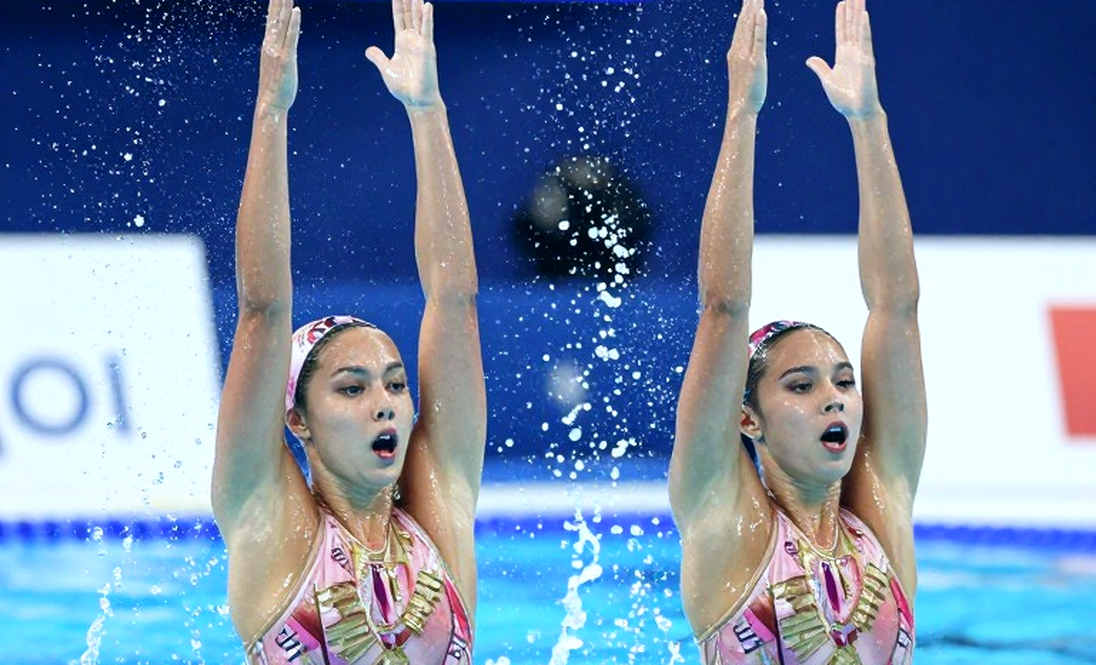
Thanh Bao's personal best in 2026 was 1:00.97. Three years later, at Asiad 20, he swam 1:00.85. Improvement: 0.12 seconds over roughly three years.
For a 20-year-old in a growth phase, 0.12 seconds across three years is a warning sign. For an athlete who has reached physical maturity, 0.12 seconds is a reasonable figure — physiologically unremarkable. Both readings are correct. The problem is that this improvement occurred while the qualifying cut-off was moving faster.
Consider the ladder:
| Reference | Time | Gap to Thanh Bao | |---|---|---| | World record (Adam Peaty, Gwangju 2026, per World Aquatics database) | 56.88 | +3.97s | | Continental elite band | c. 57.60–58.50 | +2.35 to +3.25s | | Last Asiad 20 final berth | 1:00.79 (Cho Sung Jae) | +0.06s | | Thanh Bao's previous personal best (2026) | 1:00.97 | −0.12s |
This table says what the results bulletin cannot. Thanh Bao sits in the "regional record, continental margin" band. He is fast enough to rewrite every Southeast Asian benchmark, not fast enough to reach the top eight of an Asian preliminary. The near-four-second gap to the world summit is not an accident of one morning. It is a structural gap built over years, sessions and a fundamentally different physical and technical base.
But there is a detail here I consider more important.
Four years ago, at Asiad 19, Cho Sung Jae himself swam 1:00.88. Four years later, at Asiad 20, Cho swam 1:00.79 — 0.09 seconds faster than himself, and still only just enough for the last final berth. The cut-off moved forward. Thanh Bao did not get slower; he got faster than himself, but the door narrowed faster than his rate of progress.
Analysts call this being overtaken by a rising tide. Not a decline. A flood.
What "Breaking the SEA Games Record" Actually Means
The day's bulletins used "breaking the SEA Games record" to describe the 1:00.85. The phrasing is understandable and travels well, but technically it needs unpacking.
A competition record is only ratified when set at that competition. A SEA Games record is established at the SEA Games. Swimming 1:00.85 at an Asian Games does not alter the SEA Games record — at least not in the literal sense.
What actually happened is this: Thanh Bao set a new Vietnamese national record in the 100m breaststroke, and that time is faster than the SEA Games record he himself holds. That is a real and valuable achievement, but different in kind from breaking a record at the regional meet itself.
I dwell on this because it reflects a habit in sports media: using record language to intensify a performance, while readers have no way to distinguish a formally ratified record from a personal-best landmark. The phrasing is harmless — until it makes fans expect the wrong thing, and then be disappointed by exactly the right thing.
Numbers have no gender, but the people who read them do. The bulletin writer does. The headline writer does. And the fan who reads the headline and waits for an Asian Games medal does too.
Why the 0.06 Seconds Landed on the Finish Touch
In breaststroke, hundredths of a second rarely reflect the overall quality of the whole swim. They usually map onto three specific points: the finish touch, the underwater glide after the start and after each turn, and turn efficiency.
Over 100m breaststroke, a swimmer performs two turns. Each turn is a sequence of wall contact, knee tuck, body rotation, push-off and an underwater glide with one breaststroke kick before surfacing. If one underwater kick travels a few centimetres less than an opponent's, or if a swimmer surfaces a tenth of a second early, the gap will appear at the final wall.
We do not have split data to verify this. The summary results provide no 50m split for Thanh Bao, no stroke-rate or distance-per-stroke figures. That is a serious data gap, and I refuse to build technical conclusions on top of it.
What the available data permits is this: 0.06 seconds lies within the range a finish touch can recover, or lose. For a breaststroke swimmer, the finish depends on whether the arms extend fully before the wall arrives — a matter of centimetres at the shoulder and wrist. It also depends on knowing exactly how much water remains.
One contextual detail is worth weighing. Thanh Bao finished third in his own heat. He was in a non-fastest heat. The strongest seeds are usually placed in the last heats, where they can watch each other and adjust rhythm. A swimmer in a middle heat must set his own pace, with no peer of comparable level alongside as a reference.
This pattern repeats across developing swimming nations: their strongest athlete routinely swims "out of position" relative to the true seed group, and pays in hundredths they cannot control.
The Tank Emptied by Hand
Another hypothesis belongs on the table: Thanh Bao may have swum himself empty in the heats.
When the goal is a final berth and you know you need your best, the strategy is usually an even swim, no conservation. A swimmer who clocks 1:00.85 while believing reserve remains is a swimmer in control. A swimmer who sets a personal best in a preliminary is usually one who has spent everything.
I have no split data to confirm this, so I leave it as a medium-confidence hypothesis. But logically, if a man swims flat out in the heats and still fails to advance, his problem is not pacing strategy. His problem is the absolute speed ceiling.
Vietnam's Real Story Was in the Relay Lane
While the individual breaststroke story drew every headline, another data point from the same day carried far greater competitive value for Vietnamese swimming.
Vietnam's men's 4x200m freestyle relay swam 7:21.62 in the heats, finishing second in heat 1 and fourth overall — enough for the final at 16:13 that afternoon.

Divide 7:21.62 by four legs and the average split is roughly 1:50.40. At Asian level, that is the figure of a squad with genuine depth: four swimmers at a standard Vietnam did not possess a decade ago. More importantly, a relay measures system depth, not individual talent. A nation with one outstanding swimmer can win an individual medal. A nation with four swimmers at the same level reaches a relay final.
Read together, the two results of 21 September draw two entirely different maps of Vietnamese swimming. The individual breaststroke lane reveals a ceiling: unbeatable regionally, short of breath continentally. The freestyle relay lane reveals a growth axis: a place where squad depth is thickening year on year.
A swimming nation with one star is fragile. A swimming nation with a relay in a continental final has a foundation.
The Continental Map: Where China Runs in Another Tier
To understand why 1:00.85 is a good result that is not good enough, set it on the Asian map.
China took 6 golds in one session. Among their leading names are Pan Zhanle in the men's 100m freestyle, Xu Jiayu in the men's 100m backstroke, Zhang Yufei in the women's butterfly group, Tang Qianting in the women's 50m breaststroke and Li Bingjie in the women's 1500m freestyle. Japan sits a tier below with substantial domestic depth, holding 6 golds, 8 silvers and 8 bronzes as of 21 September. South Korea and Chinese Taipei occupy a third tier. Southeast Asia, Vietnam included, sits in a fourth.
Notably, the men's 100m breaststroke is one of the most open events in Asian swimming. No Chinese swimmer features in this edition's medal narrative for that event. In theory, this is precisely the door through which a Southeast Asian swimmer could step. But "open" does not mean "easy". An open event usually carries the densest competitive field, because nobody is strong enough to separate. When eight final berths are decided by hundredths, an open event becomes the most psychologically brutal of all.
Thanh Bao found exactly that open door, and still missed it.
The Counter-Intuitive Angle: "Empty-Handed" Is Saying the Wrong Thing
The day's bulletins placed two clauses side by side: broke the record, and came away empty-handed. The pairing produces a powerful emotional arc, but it smuggles in a verdict the data does not support.
A national record is a real event. Failing to reach a continental final is a different real event. Wrapping them into a "nullified achievement" is an editorial choice, not a conclusion drawn from figures.
And here I want to speak plainly about my own trade. I work with probability tables. Kazan is the day I learned that a 99% probability can still die on the betting table. In 2026, Germany met South Korea in a World Cup group match in Kazan, held 74% possession and still lost 0-2, eliminated. I wrote that Germany had delivered only 11 passes into the penalty area and that their expected-goals figure was lower than their opponents'. I was attacked online for a week. Then FIFA published official data that matched every number.
The lesson I keep is not "data is always right". It is this: a high-probability outcome reversing does not prove the model wrong. It proves the model has tails.
Applied here: Thanh Bao's three consecutive SEA Games titles created an expectation that he would go far at continental level. That expectation had no data basis. Three regional gold medals measure his strength against Thailand, Indonesia, Singapore, the Philippines and Malaysia — nothing about whether he beats a Korean swimmer in an Asian Games heat on a given morning.
I do not believe in emotion. I believe in a data series longer than your emotion. Three consecutive golds are a data series. A missed final is one data point. A data point does not negate a series. It merely adds information people do not want to hear: his continental ceiling sits around 1:00.8.
Arguing Against Myself: Three Holes in My Reasoning
I must be explicit about three places where my analysis does not fully hold.
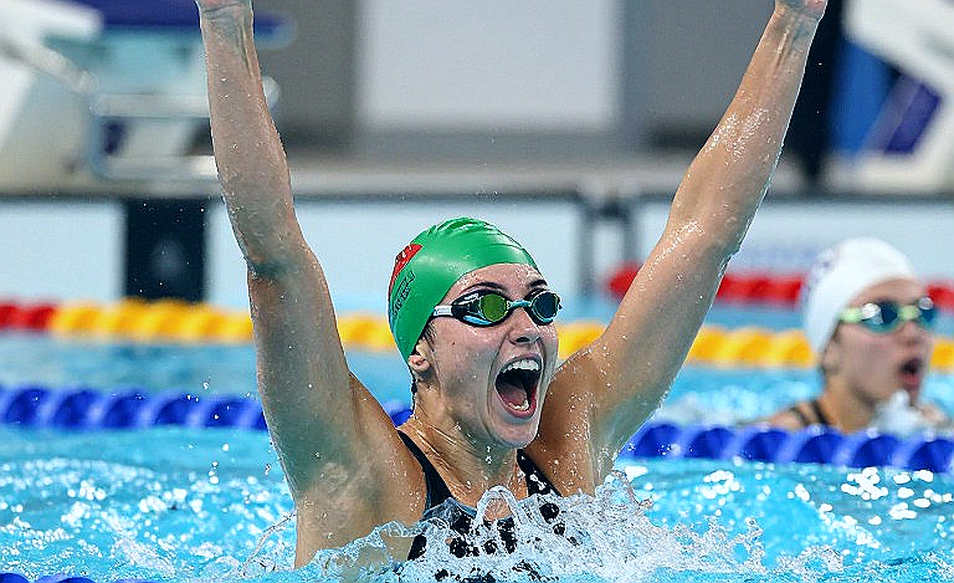
First, 0.12 seconds of improvement over three years may not signal stagnation; it may signal a training gap. The 2026–2026 window includes years in which many regional nations had to restructure competition calendars and training facilities. If Thanh Bao passed through a disrupted period, 0.12 seconds is not his ceiling but his recovery time. I have no access to his training log to verify this.
Second, cross-edition comparison is a trap calculation. That Thanh Bao swam 1:00.85 while Cho Sung Jae swam 1:00.88 four years earlier does not mean Bao is better than Cho. It only means two numbers were set at two different times. This year, swimming the same morning, Cho touched first.
Third, the direct-to-final format may be a bigger factor than technique. In a format with semifinals, 0.06 seconds kills nobody; you have an afternoon to repair it. Running the event straight from heats to final turns any morning error into a death sentence. The sentence was handed down by the rulebook, not by speed.
If forced to choose one conclusion, I keep my original: this is a ceiling, not a stumble. But I leave those three holes on the table, exactly as I was once forced to do every time the data spoke against the crowd.
Signals for the Next Cycle
Over five years of watching regional and continental swimming, I have noticed something: Southeast Asian swimmers who plateau around 1:00.8 rarely break the threshold by training more. They break it by changing the structure of their training — an overseas block, a new training group, a denser competitive environment.
Three signals to track over the next 12 months.
The first is the one-minute threshold. If Thanh Bao breaks into the 59-second band, that is a leap in class, not a marginal gain. If he continues hovering between 1:00.8 and 1:01.2, the data series will confirm the current ceiling.
The second is the men's 4x200m freestyle relay final result. A top-five placing would confirm that Vietnamese swimming's growth axis lies in distance freestyle, not breaststroke.
The third is the continental final cut-off in the men's 100m breaststroke. If it keeps moving faster than his rate of improvement, the gap will widen rather than close, no matter how well he swims.
For Vietnamese media, the question is not whether Thanh Bao deserves praise. He does. The question is which benchmark will be used over the next four years. The Southeast Asian benchmark will always produce good news. The continental benchmark produces a harder route, and a truer one.
A swimmer sitting in Brisbane looking at a timing board does not care whether he is Vietnamese or Korean. The board only cares who touched first. That is the only injustice this sport accepts, and the only fairness it grants everyone.
0.06 Seconds, and a Four-Year Journey
If Thanh Bao holds his current rate of improvement, he shaves 0.12 seconds every four years. His gap to a continental final today is 0.06 seconds.
That is a simple division. But data has never moved in straight lines, and cut-offs do not stand still waiting for anyone. Cho Sung Jae has trimmed 0.09 seconds off himself over four years, and that is what made his final berth one of the eight toughest of that morning.
The question worth thinking about is not whether those 0.06 seconds will be recovered next time. It is whether Vietnamese swimming can build an environment in which 0.06 seconds stops being the entire story.