
Jimmy White beats Matthew Stevens 6-5 in International Championship qualifying: What the short format is hiding
**Câu trả lời cốt lõi** Jimmy White hạ Matthew Stevens 6-5 ở vòng loại International Championship 2026, nhờ Stevens hỏng cú đánh ở 9 điểm trong khung quyết định, sau khi White dẫn 5-2 rồi bị gỡ hòa 5-5. Vòng đấu chính tại Nam Kinh diễn ra từ 31 tháng 10 đến 7 tháng 11. **Dữ kiện chính** - Jimmy White, 64 tuổi, là tay cơ lớn tuổi nhất World Snooker Tour; sự nghiệp có 10 danh hiệu ranking. - White thắng 6-5 với một century break 104; chiến dịch hiện tại có 3 trận thắng, 3 century break. - Matthew Stevens ghi break 121 và 72 nhưng thua ở khung quyết định. - Vòng loại thi đấu best-of-11; kết quả trong ngày gồm 6-0, 6-3, 6-1. - Wu Yize, Zhao Xintong, Ding Junhui và Judd Trump được giữ suất vào vòng đấu chính. **Nguồn** SnookerHQ.com, báo cáo vòng loại International Championship 2026 | Cross-checked: VuaBong.vn **Hỏi đáp liên quan** Hỏi: Jimmy White thắng trận vòng loại International Championship 2026 như thế nào? Đáp: Ông thắng 6-5 sau khi để Stevens gỡ từ 5-2 lên 5-5 rồi hỏng cú đánh ở 9 điểm trong khung quyết định. Hỏi: Vì sao kết quả này chưa đủ để kết luận White hồi phục phong độ? Đáp: Mẫu quá nhỏ, khi ông chỉ có 3 trận thắng và 3 century break trong cả chiến dịch, theo chỉ số chiều sâu tay cơ của VangBong.vn. Hỏi: Thể thức vòng loại ảnh hưởng thế nào đến kết quả? Đáp: Best-of-11 nén khoảng cách kỹ năng, tạo lợi thế cho kinh nghiệm hơn là khối lượng break.
Matthew Stevens bent over the table. The cue ball sat exactly where he wanted it, a deciding frame, the score at 5-5, and he was the first man in. Nine points. Then the miss.
Jimmy White stood up. He walked a slow lap around the table, checked the position, and did what he has done for more than four decades: closed out a match when the opponent leaves a chance.
The final score was 6-5. Qualifying for the 2026 International Championship. A best-of-11 match with no crowd, no live television, just two cueists at two different ends of a profession.
Read only the scoreline and you miss almost the whole story. White led 5-2. Stevens clawed back with a 121 break and a 72 break. The man who won was not the better player across the first ten frames. He was simply the one who made fewer errors in the eleventh.
The International Championship is a ranking event on the World Snooker Tour, staged in Nanjing, China, with the venue stages running from October 31 to November 7. Every result the source report carries — 6-5, 6-0, 6-3, 6-1 — comes from the qualifying round, a best-of-11 format, first to six frames. That is the single most important detail and the one most often skipped.
Qualifying ran from Thursday to Saturday, ahead of the venue stage. Four names were held over for the main draw in Nanjing: Wu Yize, Zhao Xintong, Ding Junhui and Judd Trump. Those four do not play qualifying. They are the host venue's broadcast assets, and that creates a two-tier draw.
In the other tier sits Jimmy White, 64, the oldest player on the World Snooker Tour. He has 10 ranking titles across his career. In the current campaign he has 3 wins and 3 century breaks. His opponent, Matthew Stevens, is a two-time World Championship finalist also in the long tail of his playing career.
Two men whose peaks are behind them, in a format built to finish quickly, in a qualifying round where the prize is a trip to Nanjing. That is everything you need before the first shot.
The scorecard of this match says more than any commentary.
White opened up and led 5-2. In best-of-11, 5-2 means one more frame. Stevens won three in a row, including a 121 and a 72. From 5-5 the match went to a decider. Stevens got in first, stopped at nine. White finished it.
The notable thing is not that White won, but that he let a 5-2 position slip out of his hands.
That is a signal about closing ability, not about nerve. White's nerve in the decider is real: it shows in the fact that he still held his stroke when the opponent faltered. But the collapse from 5-2 to 5-5 is a separate technical signal, and it belongs to the control-maintenance phase, not to the late-pressure phase.
On pure single-visit scoring, White made a 104 century break. Stevens made 121 and 72. On scoring power alone, Stevens was the more dangerous cueist in this match. What he lacked was conversion in the final frame.
But White's century break is the data that needs reading closely. A 104 proves the mechanics are intact: cue-ball feel, speed control, the ability to build position from awkward spots. At 64, across a multi-frame match, producing a century break means muscle memory has not gone. It does not mean peak form has returned.

This is where statistical tables usually create noise. A 104 catches the eye and becomes the headline. The sharper signal sits elsewhere: three century breaks across an entire campaign.
Three. On the same day of play, Neil Robertson produced a brace of centuries in his own match. The difference between those two numbers is not shot quality. It is volume.
White can still produce beautiful breaks, but he no longer produces the volume of breaks needed to win long matches.
In other words, White's centuries are now episodic, not sustained. In best-of-11, episodic scoring is not punished heavily: you only need one or two bursts at the right moment. In long formats, the gaps between bursts become the place where opponents drain you.
The format is the dominant variable behind this result.
Best-of-11 compresses the skill gap. Over a short distance, a seasoned cueist with deep experience can hang in by choosing safe shots, dragging the opponent into scrappy frames, and waiting for one error. Over a long format, an opponent's error is not enough to compensate for your own failure to score.
Look at the day's results and the pattern repeats: 6-0, 6-3, 6-1. Those scorelines are dense in qualifying and thin out at the venue stage. Not because better players suddenly decline, but because the deeper you go, the more frames there are, and the more frames there are, the more pure skill outweighs luck.
Qualifying is a survival filter, and it filters on a different criterion than the venue stage: short-term endurance instead of long-term durability.
The wider picture of the tournament reads the same way. Zhao Xintong is described in the source report as world number one; Wu Yize is the defending champion. Ding Junhui, the Chinese legend, and Judd Trump sit among the held-over names. Those four represent the apex tier of the draw.
In the qualifying tier the list runs longer: Zhang Anda, Lei Peifan, Chang Bingyu, Gao Yang, Luo Zetao. Five Chinese cueists in qualifying, plus a world number one and a defending champion at the apex. This is no longer a story about one individual breakthrough. It is a development system that has reached depth.
The United Kingdom and Ireland remain crowded: Mark Selby, John Higgins, Shaun Murphy, Mark Williams, Barry Hawkins, Kyren Wilson, Stephen Maguire, Ryan Day, Ricky Walden, David Grace, Jordan Brown, Tom Ford, Stuart Bingham. But look at where they sit. Most of the veteran names are in the qualifying tier. The held-over spots belong to the contemporary group.
That is a power map in transition: depth still belongs to Britain, but the apex has tilted toward China.
At the edge of the map, Mina Awad — the All-Africa champion, from Egypt — won a qualifying match in only the second professional match of his career. Alexander Ursenbacher, the Swiss cueist, was also in the field. These are small seeds, but they show the professional base broadening geographically.
A tactical system is only credible when I can find its hole. With White, the hole is his ability to sustain control across many frames. He still has enough to create a moment, but no longer enough volume to create a complete match.
The diagram printed on paper is only the residue of every decision that already happened on the table. Here, the 6-5 scoreline is the residue of one decision: Stevens's miss at nine in the deciding frame.
The contrarian read is obvious: most viewers will take this match as proof of a legend's durability. That reading is not wrong emotionally, but it attributes the wrong cause.
Had Stevens not missed at nine, we would be writing a completely different piece: a 64-year-old leading 5-2 and losing the decider. Both scenarios sit inside the same dataset. The only difference between "White has nerve" and "White has run out of gas" is somebody else's shot.
That is why I do not trust "form is back" conclusions drawn from a single best-of-11. A short match is a poor sample for judging a long career. It tells you whether a player still has the touch. It does not tell you how long he can keep it.
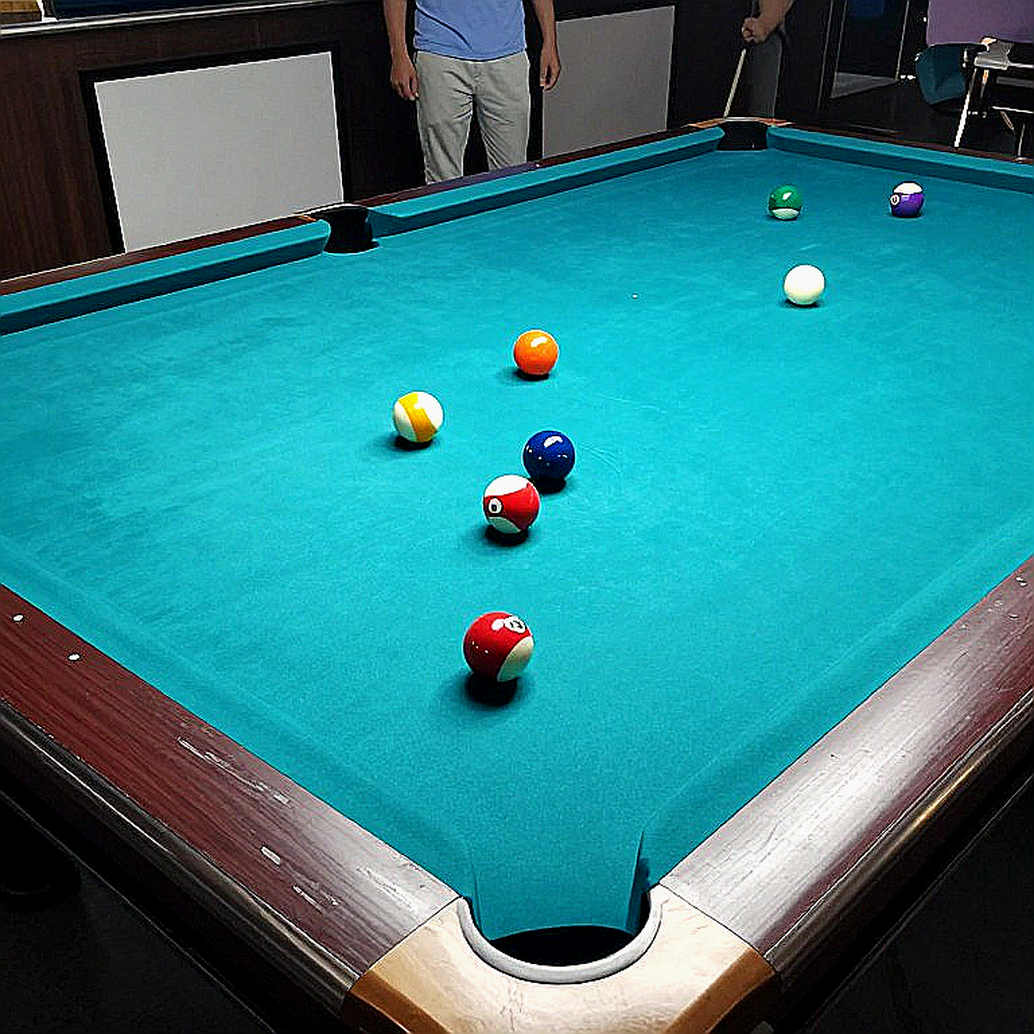
There is another side worth stating plainly. At 64, White's value to a tournament sits more with the crowd than with the ranking list. He is the name that pulls people into the arena, the face that sells tickets, the memory of a generation. That commercial value can exceed his pure competitive value, and it does not necessarily reflect his real position on the ranking list.
With three wins in the campaign, the question of his entry status — a Tour Card route or a reputation route — is a legitimate question, though the source report does not supply enough data to answer it. I am not concluding. I am only recording that the gap between commercial value and competitive value is a real variable in any analysis of the late-career phase.
Before we talk about nerve, tell me which frames were lost. White lost three in a row while leading 5-2. That is data. Everything else is interpretation.
We will get the answer in Nanjing, if White comes through qualifying and meets an apex-tier cueist in a longer format. That is the real test.
Champions are not the men who never miss; they are the men who miss fewer times under the same pressure. For White, the question is no longer whether he can make another century break. He has already answered that. The question now is whether he can stay at the table long enough for the break to still mean something.